What is cross-platform identity theft?
Cross-platform identity theft happens when a cybercriminal uses one compromised credential to access multiple online services, not just the one they originally breached. The attacker doesn’t need a separate hack for each platform. Instead, they exploit the trust bridges you’ve unknowingly built between your accounts through shared passwords, linked recovery emails, or federated logins.
Key concepts that define this threat:
- Credential reuse: One password unlocks several accounts simultaneously
- Recovery path exploitation: A shared email or phone number becomes a master key
- Federated login abuse: Single sign-on systems can expand the attacker’s reach across every connected service
- Identity reuse risk: NIST SP 800-63-4 specifically calls for ongoing assessment of compounded risks introduced by shared identity systems
Experts at Cisco Duo and Malwarebytes consistently flag this pattern as one of the most underestimated threats in digital identity security today. Sidenty’s legal and technical teams see it firsthand when clients discover one leaked credential has compromised accounts across multiple platforms at once.
Table of Contents
- How attackers carry out cross-platform fraud
- What are the real risks to your privacy and security?
- How to protect yourself against cross-platform identity theft
- How professional identity protection services help
- Real-world examples of cross-platform identity theft
- What laws protect you from cross-platform identity theft?
- What to do immediately after you become a victim
- Key Takeaways
How attackers carry out cross-platform fraud
Cybercriminals rarely rely on brute force. They follow the path of least resistance, and your shared credentials are exactly that.
Common attack methods include:
- Credential stuffing: Attackers take usernames and passwords from one data breach and test them automatically across dozens of other platforms
- SIM swap fraud: Case studies have documented how fraudulent SIM reassignment lets attackers intercept authentication codes and pivot across financial and digital services simultaneously
- Phishing and spear phishing: The IRS warns that tax professionals are prime targets of criminal syndicates using phishing to access cloud-stored client data
- Fake brand partnership scams: Malwarebytes reports that influencers are targeted through fake job offers designed to extract login credentials or financial data
- Recovery path hijacking: Attackers reset passwords through a shared email account they’ve already compromised
What makes these attacks so effective is their sequential nature. Each small exploit builds on the last, and by the time you notice something is wrong, the attacker has already moved across several of your accounts.
What are the real risks to your privacy and security?

The damage from cross-platform identity theft spreads fast. Security researchers describe this as the “blast radius” effect: one compromised login path can grant access to multiple services, multiplying the harm from a single breach.
The personal consequences are serious:
- Financial theft: Attackers drain bank accounts, make unauthorized purchases, or open new credit lines in your name
- Reputational damage: Impersonation on social media or professional platforms can destroy relationships and career prospects
- Data exposure: Personal photos, private messages, and sensitive documents become accessible across every linked service
- Tax fraud: The IRS reports that stolen identity data is used to file fraudulent tax returns, blocking your legitimate refund
Research shows that 79% of organizations have experienced secrets leaks, with 77% resulting in tangible damage. For individuals, the stakes are just as high. A single shared recovery email can silently connect your banking, email, and social accounts into one vulnerable chain.
How to protect yourself against cross-platform identity theft
Protecting your digital identity requires both the right tools and the right habits. The good news is that a few deliberate changes dramatically reduce your exposure.
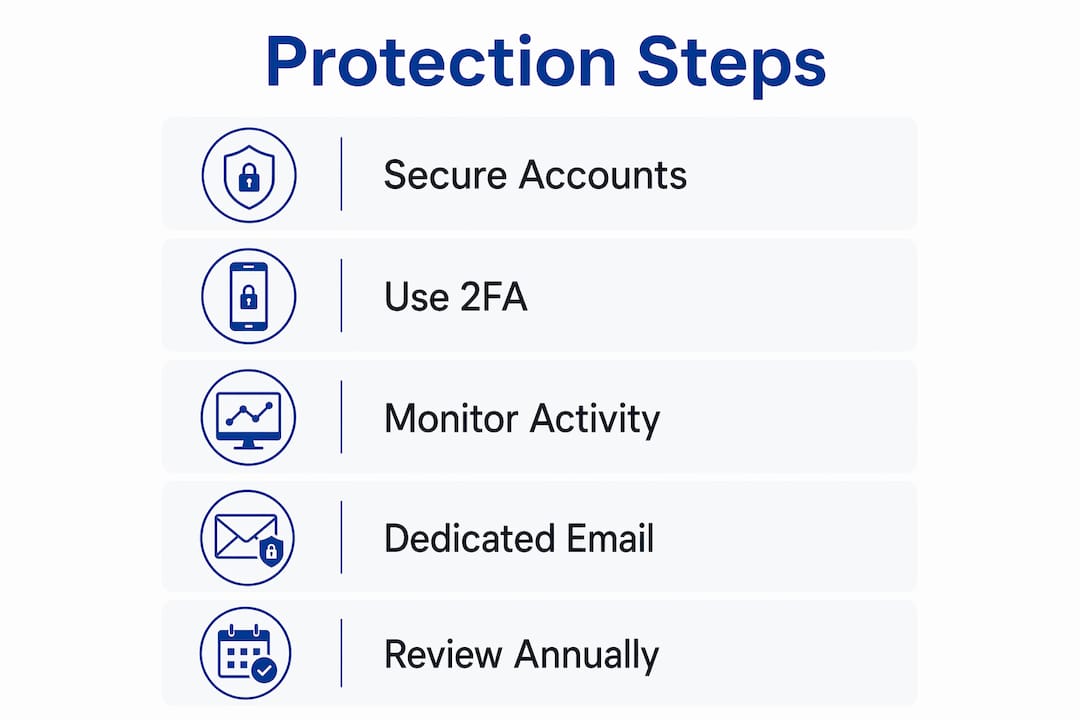
Core protection steps:
- Use unique passwords for every account. A password manager makes this practical without requiring you to memorize dozens of credentials
- Enable multifactor authentication (MFA) everywhere. Cisco Duo’s zero-trust framework emphasizes continuous verification as the single most effective control against identity compromise
- Segment your recovery options. Don’t use the same email address or phone number as the recovery contact for every account
- Audit your federated logins. Review which apps are connected through Google or Apple sign-in and revoke access to any you no longer use
- Monitor for early warning signs. Unexpected password reset emails, unfamiliar login locations, or accounts you don’t recognize are all early signs of identity theft
Pro Tip: Set up a dedicated email address solely for account recovery. Keep it private, share it with no one, and never use it for regular communication. This single step limits your blast radius significantly.
Sidenty recommends reviewing your digital identity protection practices annually, especially as platforms update their authentication requirements. Aligning with NIST’s identity risk management guidance is a practical baseline for anyone serious about staying protected.
How professional identity protection services help
Some cross-platform threats go beyond what you can handle alone. When unauthorized content spreads across platforms, or when deepfakes of your likeness appear online, you need legal and technical expertise working on your behalf.
Sidenty provides exactly that kind of support:
- Advanced monitoring to detect unauthorized use of your identity across platforms before the damage escalates
- Legal content removal with a 99.8% success rate, covering DMCA notices, Google delisting, and hosting provider complaints
- Deepfake prevention and removal for creators whose image or voice is being misused
- Personalized case management so you’re never navigating a complex removal process alone
Professional services address the threats that fall outside your direct control, particularly when attackers have already published or distributed stolen content. Engaging expert help early limits the spread and protects your reputation while legal processes move forward. You can learn more about safeguarding against identity theft through layered technical and legal approaches.
Real-world examples of cross-platform identity theft
These scenarios illustrate how cross-platform fraud actually unfolds in practice.
The influencer credential scam: An attacker poses as a brand representative and sends a fake collaboration agreement requiring the creator to log in through a spoofed portal. Once the creator enters their credentials, the attacker accesses their Instagram, YouTube, and linked email within minutes, using each platform’s “sign in with Google” connection to pivot automatically.
The SIM swap escalation: A victim’s phone carrier is tricked into transferring their number to an attacker-controlled SIM card. The attacker then uses SMS-based authentication codes to reset passwords on the victim’s bank, email, and social media accounts in sequence. The 2025 case study published in the Journal of Artificial Intelligence and Technological Development reconstructed exactly this escalation pattern, identifying weak subscriber verification as the entry point.
The tax professional breach: Criminal syndicates target accountants and tax preparers, gaining access to cloud-stored client files through phishing. From there, they use real financial data to file fraudulent returns for dozens of clients simultaneously.
What laws protect you from cross-platform identity theft?
Several federal and state laws address identity theft and give you concrete rights as a victim.
The Identity Theft Enforcement and Restitution Act makes identity theft a federal crime and allows courts to order restitution. The Fair Credit Reporting Act (FCRA) gives you the right to place a fraud alert or credit freeze with the three major bureaus, Equifax, Experian, and TransUnion, at no cost. The TAKE IT DOWN Act, recently signed into law, requires platforms to remove non-consensual intimate images, including AI-generated deepfakes, and holds platforms accountable through the FTC.
The FTC’s IdentityTheft.gov provides step-by-step guidance for each type of stolen information, from Social Security numbers to login credentials. Filing a report there creates an official record that supports insurance claims, credit disputes, and law enforcement investigations.
What to do immediately after you become a victim
Act fast. The first 24–48 hours after discovering a breach determine how much damage you can contain.
- Change your passwords on every affected account, starting with your primary email
- Enable MFA on all accounts if you haven’t already
- Contact your bank and credit card issuers to flag suspicious transactions and request new account numbers
- Place a fraud alert or credit freeze with all three credit bureaus
- File a report at IdentityTheft.gov to document the theft officially
- Report to the FTC and your local law enforcement if financial fraud has occurred
- Contact Sidenty if unauthorized content, deepfakes, or impersonation accounts are part of the attack
Speed matters because attackers move quickly once they have access. Locking down your accounts and notifying the right institutions within the first day can prevent secondary fraud from compounding the original breach.
Key Takeaways
Cross-platform identity theft spreads from a single compromised credential across every account you’ve linked through shared passwords, recovery emails, or federated logins.
| Point | Details |
|---|---|
| One breach, many victims | Shared credentials let attackers pivot across platforms without a separate hack for each. |
| Blast radius is real | 80% of identity breaches involved compromised non-human identities like service accounts, highlighting the scale of cross-platform threats. |
| MFA is your strongest defense | Continuous verification, as recommended by Cisco Duo’s zero-trust model, stops most credential-based attacks. |
| Act within 24–48 hours | Freezing credit and changing passwords in the first two days limits how far the damage spreads. |
| Professional help exists | Sidenty’s legal and technical team achieves a high success rate in removing unauthorized content across platforms. |
Concerned your identity may already be at risk? Sidenty’s team of legal experts and identity protection specialists is ready to help. Explore professional identity protection built for the threats you face in 2026.