
If your content just leaked, do three things right now: expire or revoke every shared link, screenshot the infringing URLs with timestamps, and file a DMCA takedown with the hosting platform. That’s your 24-hour priority. The longer strategy is a defense-in-depth approach combining technical barriers, tight account controls, and active monitoring so that future leaks are traceable, removable, and costly for whoever shares them.
Start here — your first three moves:
- Revoke or expire all active shared links immediately
- Screenshot infringing pages with full URLs and timestamps as evidence
- Submit DMCA takedown notices to the platform and hosting provider, prioritizing high-traffic reposts
The industry has shifted from chasing perfect prevention (which doesn’t exist) to layered deterrence: watermarking, monitoring, and legal pressure working together to make leaks traceable and expensive for perpetrators.
Table of Contents
- What to do right now if your content is leaking
- Technical defenses that deter and trace unauthorized sharing
- How to lock down your accounts and collaborator access
- Legal foundations that make enforcement stick
- How to detect unauthorized copies before they spread
- End-to-end response: from detection to removal
- Platform-specific steps for OnlyFans, Twitch, Patreon, and YouTube
- When should you hire a professional removal service?
- Key Takeaways
- The mistake most creators make
- Sidenty handles what DIY takedowns can’t
- Useful sources
What to do right now if your content is leaking
Speed matters. The first 72 hours determine how far a leak spreads and whether you preserve the legal evidence needed for enforcement.
Hours 0–24 (Contain and Document):
- Expire or delete every active shared link on your platform
- Rotate your account passwords and revoke collaborator access immediately
- Enable MFA on every account if it isn’t already active
- Screenshot each infringing URL, capturing the full page with date/time visible
- Save HTTP headers and page source where possible; note the hosting provider
Hours 24–48 (File Takedowns):
- Submit platform reports on the sites hosting the content; start with the highest-traffic reposts
- File DMCA takedown notices with each platform’s designated copyright agent
- Send a DMCA notice to the hosting provider if the platform doesn’t respond within 24 hours
- Request Google delisting for any indexed infringing URLs
Hours 48–72 (Monitor and Escalate):
- Run reverse-image and keyword searches to find additional copies
- Document all takedown submissions with confirmation numbers and timestamps
- If reuploads appear faster than you can remove them, escalate to a managed removal service
Pro Tip: Create a simple chain-of-custody log: a spreadsheet with the infringing URL, screenshot filename, date captured, takedown filed date, and outcome. This record is what makes legal escalation possible later.
Technical defenses that deter and trace unauthorized sharing
No single tool stops every leak, but the right combination makes your content significantly harder to redistribute and much easier to trace when it does get out. DRM, encrypted streaming, watermarking, and monitoring form the core technical stack.
| Method | What it prevents | Survivability | Best for |
|---|---|---|---|
| HLS + AES encryption | Screen-capture workarounds, direct download | High (stream-level) | Video creators, live streamers |
| Tokenized/expiring links | Link sharing, unauthorized access after expiry | High | Patreon, OnlyFans, gated content |
| Visible watermark | Casual redistribution | Low (easily cropped) | Low-risk previews only |
| Steganographic watermark | Untraceable redistribution | High (survives compression) | All paid media assets |
| Persistent file DRM | Post-download access, printing, copying | High (requires DRM viewer) | Documents, downloadable files |
Imperceptible watermarking survives social uploads, cropping, and compression far better than visible watermarks, making it the preferred traceability method for media assets. Embed a unique watermark per subscriber so you can identify the source of any leak from the file itself.
Persistent DRM goes further: it binds usage policies to the file rather than the hosting platform, so you can revoke access, set expiry dates, and restrict printing even after a user downloads the file. The trade-off is that recipients need a compatible viewer, which adds friction.
Pro Tip: Tokenized streaming links that expire after a single session or a set time window are one of the highest-ROI protections for video creators. They’re supported natively on most major platforms and add zero friction for legitimate subscribers.
How to lock down your accounts and collaborator access
Credential mismanagement and weak access controls are the leading causes of bulk content leaks, not sophisticated hacking. Fixing these gaps is faster and cheaper than any anti-piracy tool.
- MFA everywhere: Enable multi-factor authentication on your platform accounts, email, cloud storage, and any tool a collaborator touches. A stolen password alone becomes useless.
- Unique passwords per platform: Use a password manager (1Password, Bitwarden, or similar) so every account has a distinct, complex credential.
- Role-based access control (RBAC): Give collaborators access only to what they need for their specific task. An editor doesn’t need your subscriber list; a photographer doesn’t need publishing rights.
- Revoke access immediately: The moment a project ends or a collaborator leaves, remove their access. Audit your active sessions and connected apps monthly.
- Per-user accounts: Never share a single login across team members. Per-user accounts create an audit trail so you can identify who accessed what and when.
- Unusual login alerts: Turn on login notifications for every account. Credential-stuffing attacks often succeed quietly without alerts enabled.
Following cybersecurity best practices for access management applies directly to creator workflows, especially when you work with editors, photographers, or social media managers.
Pro Tip: Add a confidentiality clause to every collaborator contract. A signed NDA doesn’t prevent every leak, but it creates legal recourse and often deters casual sharing more effectively than any technical control.

Legal foundations that make enforcement stick
Your legal tools are only as strong as the groundwork you lay before a leak happens.
Terms of Service and Acceptable Use Policies should explicitly prohibit sharing paid content, specify consequences (account termination, no refund), and state that violations may result in legal action. Clear ToS with stated consequences enable faster platform takedowns because moderators have a policy violation to act on, not just a copyright claim.
Copyright registration is the step most creators skip and later regret. Copyright protection is automatic in the U.S. the moment you create original work, but registration with the U.S. Copyright Office unlocks statutory damages and attorney’s fees in litigation, which is what gives enforcement real teeth. Register your most valuable content before publishing it.
DMCA takedown workflow:
- Identify the infringing URL and the platform’s designated DMCA agent (listed in their ToS or at the U.S. Copyright Office’s agent directory)
- Prepare your notice: your contact info, a description of the original work, the infringing URL, a good-faith statement, and your signature
- Submit to the platform agent and, separately, to the hosting provider
- If the platform fails to act within 10–14 business days, escalate to the host’s abuse team
- For Google-indexed copies, submit a copyright removal request through Google’s legal tools
DIY DMCA filings cost nothing but your time. Managed removal services typically charge per takedown or on a monthly retainer. Legal escalation through an IP attorney runs significantly higher, but statutory damages from a registered copyright can far exceed those costs if you win.
How to detect unauthorized copies before they spread
Early detection limits damage. The faster you find a repost, the fewer people see it and the stronger your takedown case.
- Reverse-image search: Run your profile photos and content thumbnails through Google Images and TinEye regularly. Schedule this weekly.
- Hash-based scanning: Some monitoring services fingerprint your content and scan known piracy sites automatically.
- Keyword and username alerts: Set Google Alerts for your creator name, platform handle, and any distinctive phrases from your content descriptions.
- Social monitoring: Search your handle and content titles directly on Reddit, Telegram, and Twitter/X, where leaks circulate fastest.
- Community reports: Tell your subscribers that reporting unauthorized copies helps protect your content. Many creators catch leaks this way first.
A practical content theft monitoring guide can help you build a repeatable weekly routine. Prioritize removing copies on high-traffic accounts and indexed pages first; a repost with 50,000 followers causes more damage than ten with 200 each.
Pro Tip: Free tools cover the basics, but if you’re publishing frequently on multiple platforms, a managed monitoring service that fingerprints your content and alerts you automatically will catch leaks you’d miss in a manual search.
End-to-end response: from detection to removal
A clear workflow prevents the panic that leads to missed steps and lost evidence.
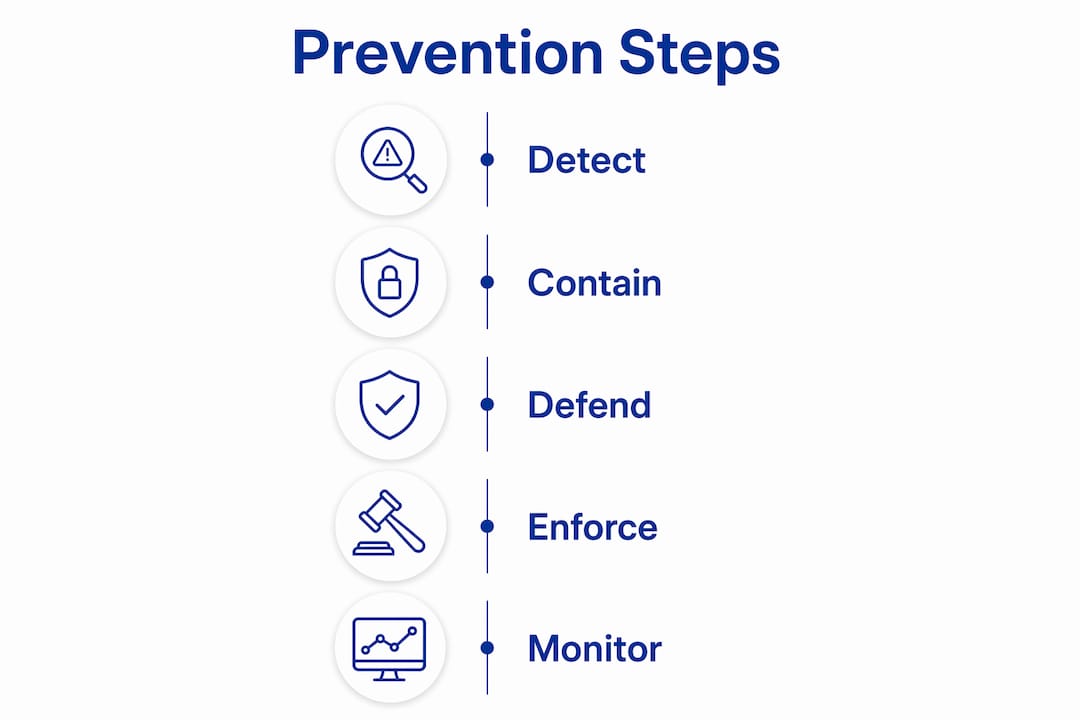
- Detect: Automated alert or manual search surfaces an infringing copy
- Preserve evidence: Screenshot the URL, capture metadata, log it in your chain-of-custody record
- Issue takedown: File with the platform’s DMCA agent; simultaneously request Google delisting if indexed
- Escalate: If no response in 10–14 days, contact the hosting provider directly; consider a managed service for repeat offenders
- Monitor for reuploads: Check the original URL weekly; set an alert for the infringing account
| Response path | Typical timeline | Approximate cost |
|---|---|---|
| DIY platform DMCA | 24 hours–14 days | Free |
| Managed removal service | 24–72 hours per takedown | Varies by provider |
| Legal escalation (IP attorney) | Weeks to months | Significant; offset by statutory damages if registered |
Managed monitoring combined with rapid takedowns materially reduces how long leaked content stays visible and limits the revenue loss that comes with it. For persistent reuploads or jurisdictional hosting that ignores DMCA notices, legal escalation or a specialist service is the practical next step.
Platform-specific steps for OnlyFans, Twitch, Patreon, and YouTube
OnlyFans
- Use the built-in expiring link feature for any content shared outside the platform
- Report infringing accounts directly through OnlyFans’ support portal with screenshot evidence
- For leaked content on third-party sites, file a DMCA notice citing your OnlyFans copyright; Sidenty’s OnlyFans copyright protection resources cover the fastest removal paths
Twitch
- Enable clip moderation in your Creator Dashboard to approve or reject clips before they go public
- For stolen VODs, submit a DMCA notice through Twitch’s designated agent
- Report impersonation accounts using Twitch’s “Report” function and follow up with an email to their Trust & Safety team
Patreon
- Use membership tiers to gate your most sensitive content to verified paying members only
- Patreon’s ToS prohibits redistribution; report violations through their creator support channel with the infringing URL and your original post link
- Watermark downloadable files with subscriber-specific identifiers before delivery
YouTube
- Content ID is available to rights holders who meet YouTube’s eligibility threshold; if you qualify, enroll your content library for automatic matching
- For creators without Content ID access, submit a standard DMCA takedown through YouTube’s copyright complaint form
- For repeat-offender channels, document each violation and request a channel strike through YouTube’s repeat-infringer policy
Pro Tip: On every platform, always report the account hosting the content, not just the individual post. An account-level report triggers a review of all their uploads and can result in termination, stopping reuploads at the source.
When should you hire a professional removal service?
Some situations outpace what a solo creator can manage. Escalation triggers include:
- Reuploads appearing faster than you can file takedowns
- High-volume leaks across multiple platforms simultaneously
- Doxxing or personal information exposure alongside the content
- Deepfake content using your likeness without consent
- Hosting in jurisdictions that routinely ignore DMCA notices
A managed service handles automated monitoring, bulk takedowns, legal escalation, and reputation repair. When evaluating a vendor, ask for their average takedown timeline, success rate, reporting cadence, and fee structure upfront.
Managed removal services are most effective when they combine automated content fingerprinting with human review. Automation catches volume; human review catches the edge cases that automated systems miss, like slightly altered thumbnails or reposted clips with added overlays. The combination is what makes persistent leaks manageable rather than overwhelming.
Pro Tip: Ask any prospective vendor for a documented success rate and a sample report before signing. A credible service will show you exactly what they track and how they measure outcomes.
Key Takeaways
Stopping unauthorized sharing requires containment within 24–72 hours, layered technical defenses, and consistent monitoring, with legal tools registered and ready before a leak ever happens.
| Point | Details |
|---|---|
| Contain leaks within 72 hours | Expire links, rotate credentials, and file DMCA notices in the first three days to limit spread. |
| Layer your technical defenses | Combine steganographic watermarking, tokenized links, and DRM for traceability and access control. |
| Fix account security first | MFA, RBAC, and per-user accounts stop more bulk leaks than any anti-piracy tool alone. |
| Register your copyright | U.S. Copyright Office registration unlocks statutory damages and makes legal escalation viable. |
| Sidenty for managed removal | Sidenty has a high content removal success rate, making it a strong option when DIY takedowns fall short. |
The mistake most creators make
The most common error isn’t skipping watermarks or ignoring DMCA. It’s waiting. Creators often spend the first 48 hours in shock, and that window is exactly when a leak multiplies fastest. By the time a takedown is filed, the content has been reposted dozens of times across platforms that are harder to reach.
The second mistake is treating security as a one-time setup. Credentials get reused. Collaborator access never gets revoked. Shared links stay active for months. These aren’t exotic vulnerabilities; they’re the gaps that account for the majority of leaks. Fixing them costs almost nothing and takes an afternoon.
The defense-in-depth approach works not because any single layer is impenetrable, but because each layer raises the cost and effort for whoever is sharing your content. Steganographic watermarks identify the source. Expiring links cut off access. DMCA notices create legal liability. Monitoring catches reuploads early. Together, they shift the equation from “easy to steal” to “risky and traceable.”
Sidenty’s focus on digital identity protection reflects exactly this philosophy: combine technical deterrence with fast legal enforcement, and make sure creators have the evidence and support they need when escalation becomes necessary.
Sidenty handles what DIY takedowns can’t
When the volume of leaks exceeds what you can manage alone, or when deepfakes and doxxing enter the picture, a specialist makes a measurable difference. Sidenty provides continuous content monitoring, bulk DMCA takedowns, deepfake removal, and full identity protection for creators on OnlyFans, Twitch, Patreon, and YouTube.
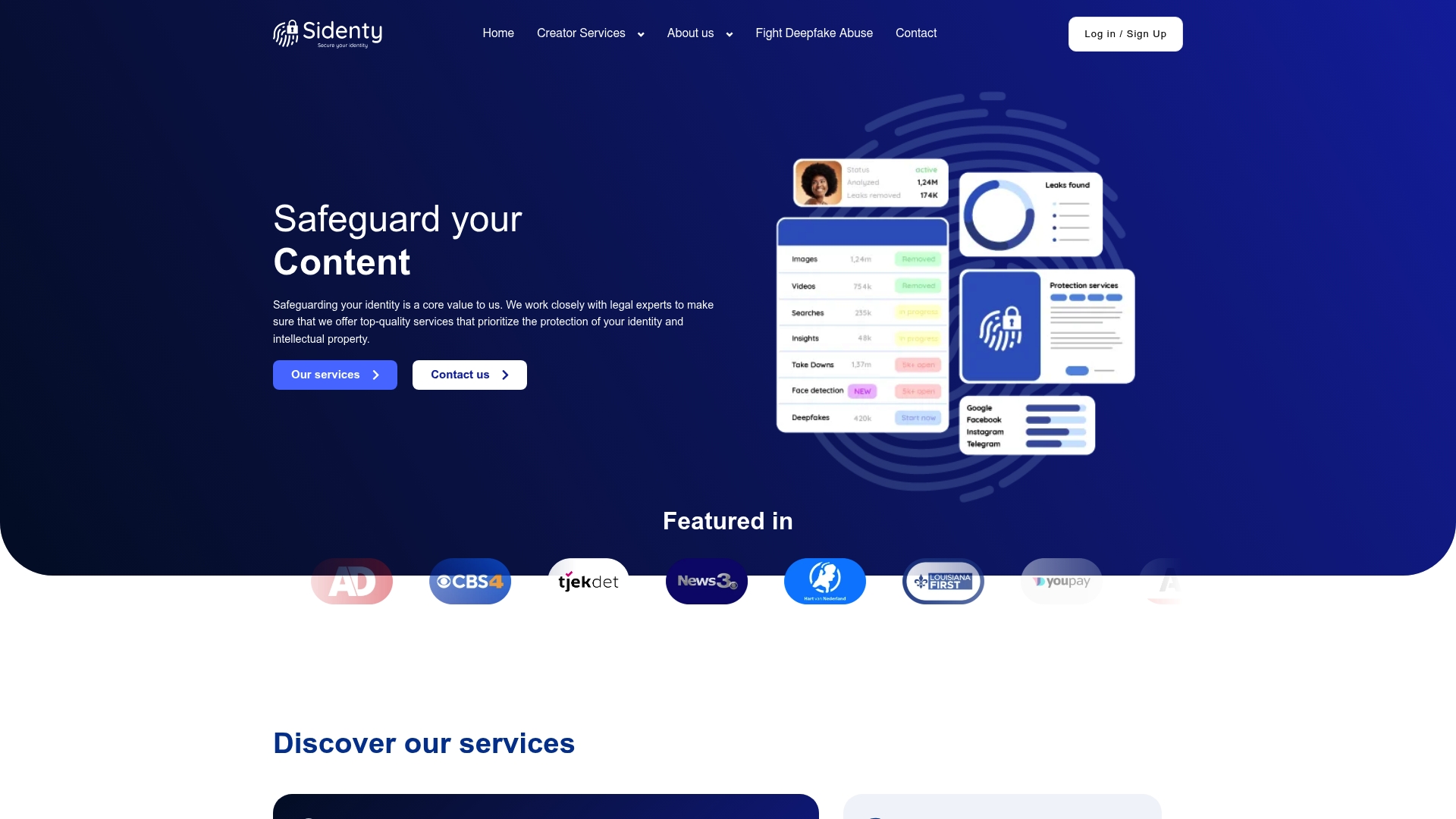
With a 99.8% content removal success rate and a legal team that handles escalations across jurisdictions, Sidenty takes the operational burden off your plate so you can focus on creating. Every case gets personalized support, transparent reporting, and a clear timeline from first detection to confirmed removal.
If your content is already circulating without your permission, visit Sidenty’s creator protection page to start a removal case today.
Useful sources
- What is DMCA? A Simple Guide to Protect Your Online Content
- How to Monitor Content Theft Online: A Creator’s Guide
- Digital Identity Protection Best Practices for 2026
- Protecting your digital content from unauthorized sharing
- How to Protect Digital Content with Copyright
- Digital Content Authentication
- Secure Digital Rights Management (DRM) Software for Documents
- File sharing security
- MemberGate: How to Prevent Unauthorized Sharing of Content
Pro Tip: Bookmark the U.S. Copyright Office’s DMCA agent directory (copyright.gov/dmca-directory) and your primary platform’s designated copyright agent page. Having these links ready before a leak happens cuts your response time significantly.