
Protecting your personal info in brand deals is the single most important step you can take before signing any sponsorship agreement. Brand deal fraud has grown more sophisticated in 2026, with scammers using AI-generated outreach, fake DocuSign templates, and data broker profiles to target creators by name. The FTC requires clear disclosure of material connections, and state-level privacy laws add another layer of compliance that most creators overlook. Understanding your rights under these frameworks, combined with solid contract and communication practices, puts the power back in your hands before any brand gets access to your data.
How to protect personal info in brand deals: spotting real offers vs. scams
The fastest way to protect yourself is to verify a brand’s identity before you respond to any outreach. Scammers count on creators moving quickly, so slowing down is your first defense.
Here are four steps to verify any brand deal offer:
Check the email domain. Legitimate brands contact creators from corporate domains, not Gmail or Yahoo addresses. Search the brand’s official website and compare the domain exactly.
Confirm payment terms in writing. Legitimate brand deals carry net-30 to net-60 day payment terms. Any offer demanding you sign within 24 hours or paying only in product is a red flag. That urgency is designed to stop you from thinking clearly.
Require a signed contract before anything ships. Accepting products before paperwork is a known scam pattern called “product-first, paperwork-last.” Professional creators never accept samples until a contract is fully executed.
Review usage rights clauses carefully. Open-ended usage rights allow brands to repurpose your content indefinitely without additional payment. Require that the contract specifies exactly where, how long, and in what format your content can be used.
Call the brand directly. Use the phone number listed on the brand’s official website, not any number provided in the offer email. A real brand will confirm the partnership without hesitation.
Pro Tip: Never let a brand rush you into signing. A legitimate partner will always give you time to review a contract with a manager or attorney.
Knowing how to hire a real partner versus a vendor also matters here. Brands that treat creators as partners provide clear contracts, dedicated contacts, and transparent payment structures from the start.
How do you secure your communication channels during brand negotiations?
Your email inbox is your most vulnerable asset during brand deal negotiations. Email compromise is the top security risk creators face, and phishing campaigns in 2026 frequently use fake DocuSign templates to steal login credentials. One click on a malicious attachment can hand a scammer access to your entire deal history.
Adopt these communication security practices before your next negotiation:
- Use a dedicated business email address for all brand outreach. Services like Proton Mail offer end-to-end encryption and reduce your exposure if your primary account is compromised.
- Enable authenticator-based two-factor authentication (2FA) on every account connected to brand deals. SMS codes are less secure than app-based codes from Google Authenticator or Authy.
- Audit active sessions regularly. Log out of any device or location you do not recognize in your email security settings.
- Never open contract attachments from unverified senders. Download files only after you have confirmed the sender’s identity through a separate channel.
- Restrict cloud storage sharing. If you store contracts or rate cards in Google Drive or Dropbox, set sharing to “specific people only” and revoke access after the deal closes.
Scammers also harvest creator data from data broker sites to personalize their attacks. Removing your personal information from broker databases like Spokeo, Whitepages, and BeenVerified reduces the quality of data attackers can use against you. This step takes time but pays off significantly.
Pro Tip: Keep your rate card and personal address in a password-protected document, not in a shared folder or a plain email draft. Treat that information like a bank PIN.

What data privacy rules apply to creators in brand partnerships?
Data privacy compliance is no longer optional for creators. The FTC treats data relationships as material connections, which means creator contracts must include data use addenda that specify how audience data is shared, what consent mechanisms are in place, and what disclosure obligations apply. Missing this clause exposes you to regulatory risk, not just the brand.
The privacy stakes are real for your audience, too. 68% of consumers abandon brands after discovering their data was shared without clear consent. That trust damage falls on you as the creator, not just the brand. Your audience holds you accountable for who you partner with.
Platform-specific rules add another layer of complexity:
- TikTok: The TikTok Events API requires server-side consent controls that go beyond standard cookie banners. If a brand asks you to run a TikTok pixel or tracking link, verify that proper consent mechanisms are in place.
- Meta (Instagram and Facebook): Meta’s data-sharing tools require explicit opt-in consent from audiences before campaign data flows to brand ad accounts.
- General platforms: Any platform collecting email addresses or behavioral data through your content requires a documented consent process in the brand contract.
Data ownership is another area creators misunderstand. Unless your contract specifies otherwise, campaign data generated during a brand deal belongs to the brand by default. Negotiate explicit data ownership language before you sign. If the brand wants access to your audience analytics, that access should be time-limited and scoped to the campaign only.
About 83% of marketers lack clear knowledge of data collection practices on creator platforms. That gap creates compliance risk for both sides of a deal. You protect yourself by asking for a data processing addendum in every contract, regardless of deal size.
What tools and workflows keep your personal data safe in sponsorships?
A consistent workflow removes the guesswork from brand collaboration confidentiality. The right tools handle the repetitive security tasks so you can focus on the creative work.
Start with these core tools:
- Password manager: Use 1Password or Bitwarden to generate and store unique passwords for every brand-related account. Reusing passwords across platforms is the fastest way to lose access to multiple accounts at once.
- Authenticator app: Google Authenticator or Authy provides app-based 2FA that is significantly harder to intercept than SMS codes.
- Encrypted email: Proton Mail encrypts messages end-to-end, making intercepted emails unreadable to third parties.
- Contract management: DocuSign or HelloSign provides audit trails for every signature, showing exactly when and where a document was signed.
Beyond tools, build a contract review checklist. Every brand deal should include these elements before you sign:
| Contract element | What to verify |
|---|---|
| Payment terms | Net-30 or net-60 days with a clear payment method |
| Usage rights | Specific platforms, duration, and format defined |
| Data use addendum | Audience data scope, consent mechanism, and retention period |
| Confidentiality clause | Narrowly defined to protect trade secrets without blocking portfolio use |
| Termination rights | Your right to exit if the brand engages in harmful conduct |
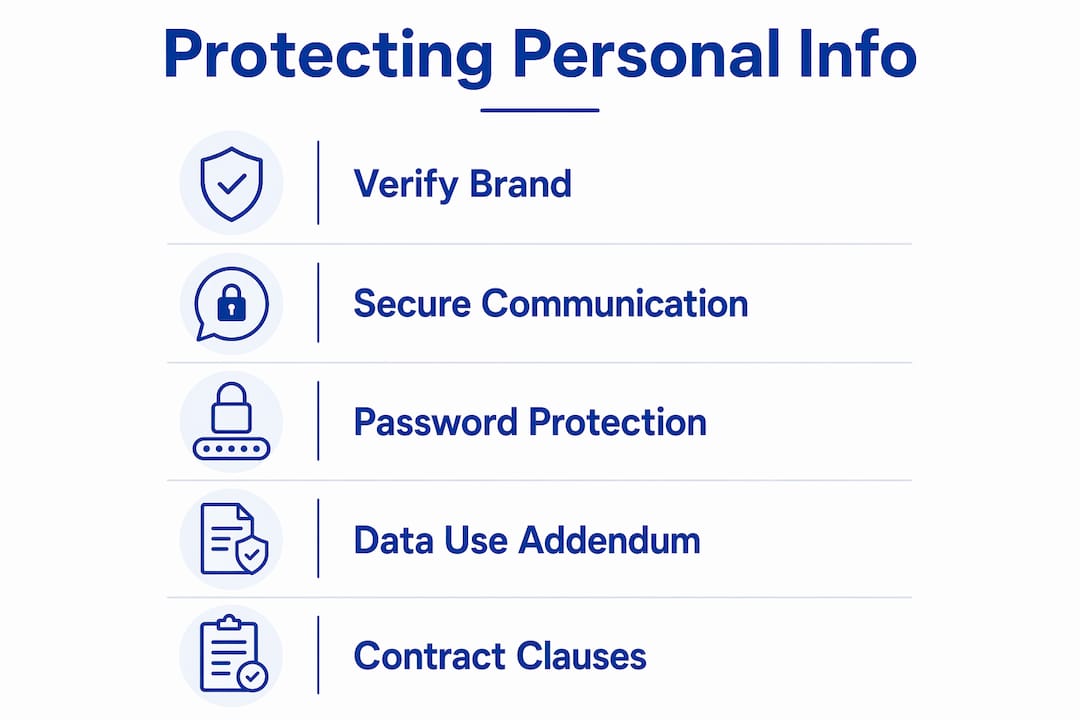
Creators should also negotiate a “reverse morals clause” that lets them terminate deals if the brand’s conduct damages their reputation. This clause is standard in California influencer contracts and is becoming more common nationally. Confidentiality clauses, meanwhile, should be narrowly defined so they protect genuine trade secrets without preventing you from showcasing the work in your portfolio.
For a full creator privacy checklist, Sidenty has compiled the key steps creators need to audit their security posture before every brand deal.
Key Takeaways
Protecting your personal information in brand deals requires verified contracts, encrypted communication, and explicit data ownership clauses before any deal is signed.
| Point | Details |
|---|---|
| Verify before engaging | Confirm brand identity via official domains and direct phone calls before responding to any offer. |
| Require contracts first | Never accept products or begin work until a fully signed contract is in place. |
| Secure your email | Use encrypted email with authenticator-based 2FA and audit active sessions regularly. |
| Demand data addenda | Every contract should specify audience data scope, consent, and ownership terms. |
| Build a review checklist | Check payment terms, usage rights, confidentiality scope, and termination rights on every deal. |
What I’ve learned watching creator scams get smarter every year
The scams targeting creators in 2026 are not the clumsy, obvious fakes from five years ago. They are personalized, well-researched, and timed to catch you when you are excited about a potential deal. At Sidenty, we see creators who have been in the industry for years get caught by outreach that uses their real name, references their actual content, and mimics the tone of a brand they genuinely want to work with. That level of personalization comes directly from data broker profiles.
What most creators still underestimate is how much of their personal information is already publicly available. Home addresses, phone numbers, family connections, and business registration details are aggregated and sold by data brokers without your knowledge. Scammers buy that data and use it to build convincing fake outreach. Removing yourself from those databases is not paranoia. It is basic professional hygiene.
The other thing I want creators to understand is that privacy compliance is not just a legal checkbox. It is a trust signal to your audience. When you handle brand partnership privacy carefully, you signal to your followers that you take their data seriously. That reputation is worth protecting as much as any single deal.
New creators especially need mentors and legal contacts before they sign their first major deal. A one-hour consultation with an entertainment or contract attorney costs far less than the fallout from a bad contract. Build that support network early. The online privacy risks creators face are only going to grow as AI-generated outreach becomes cheaper and more convincing.
— Sidenty
How Sidenty helps creators stay protected in brand partnerships
Sidenty works with creators across platforms including OnlyFans and Twitch to protect their digital identity from the specific risks that come with brand deals and public-facing work.
When a brand deal goes wrong, or when your personal data ends up somewhere it should not, the damage moves fast. Sidenty’s team of legal experts and identity protection specialists handles content removal, data leak monitoring, and deepfake prevention with a 99.8% success rate in content removal. Creators who work with Sidenty get personalized support, not a generic takedown form. If you want to understand exactly what your digital footprint exposes and how to close those gaps, Sidenty’s creator protection services are built for that work.
FAQ
What counts as personal info in a brand deal?
Personal information in brand deals includes your legal name, home address, payment details, tax identification number, and audience analytics. Any data that identifies you or your followers requires protection under FTC guidelines and applicable state privacy laws.
How do I know if a brand deal offer is a scam?
Scam offers typically demand fast signatures, offer payment only in product, or come from non-corporate email domains. Always verify the sender’s identity through the brand’s official website before responding.
What is a data use addendum and do I need one?
A data use addendum is a contract section that defines how audience data is collected, shared, and retained during a brand campaign. Every creator contract involving audience data or platform tracking should include one to meet FTC compliance standards.
Can a brand own my audience data after a deal ends?
Yes. Unless your contract specifies otherwise, campaign data defaults to brand ownership. Negotiate time-limited, campaign-scoped data access clauses before signing any agreement.
What is the safest way to communicate with brands during negotiations?
Use a dedicated encrypted email account with authenticator-based 2FA for all brand communications. Never share rate cards or personal details over social media DMs or unencrypted platforms.