
Identity theft is defined as the unauthorized use of another person’s personal information to commit fraud, and its psychological effects are as damaging as its financial ones. If you have experienced identity theft, you already know the gut punch of discovering your accounts, credit, or digital identity have been violated. Research confirms that victims score significantly higher on depression, anxiety, and PTSD compared to non-victims. The financial harm gets the headlines, but the emotional aftermath can last far longer. Understanding how identity theft affects mental health is the first step toward reclaiming your sense of safety and control.
How does identity theft affect mental health?
Identity theft triggers a cluster of psychological symptoms that mirror those seen in other trauma survivors. Victims commonly experience anxiety, depression, and post-traumatic stress disorder (PTSD). These are not overreactions. They are recognized clinical responses to a serious violation of personal safety.

Research measuring the psychological effects of identity theft found average PTSD scores of 36.4 among fraud victims, with depression averaging 12.7 and anxiety averaging 11.3. Those numbers place many victims in the moderate-to-severe range on standard clinical scales. The same study found a strong negative correlation between mental health distress and digital trust, with a score of r = -.52. That means the more distressed you feel, the less you trust online systems, which creates a cycle that is hard to break.
Beyond clinical symptoms, victims report a wide range of emotional responses:
- Fear and hypervigilance: Constant worry about what else may have been compromised
- Anger and helplessness: Frustration at not being able to stop the harm quickly
- Shame and embarrassment: A false sense that you should have protected yourself better
- Distrust: Loss of confidence in institutions, platforms, and even personal relationships
- Exhaustion: The chronic stress of ongoing monitoring wears victims down over time
These responses are normal reactions to an invasive crime. Recognizing them as such is a critical part of early recovery.
Pro Tip: Keep a simple journal of your emotional state during recovery. Tracking patterns helps you identify when anxiety spikes, which makes it easier to seek help at the right moment.
Does financial resolution improve mental health outcomes?
Financial recovery and emotional recovery do not move at the same pace. Victims who resolve their financial cases quickly tend to experience less prolonged distress. But the data shows that full resolution is rare.
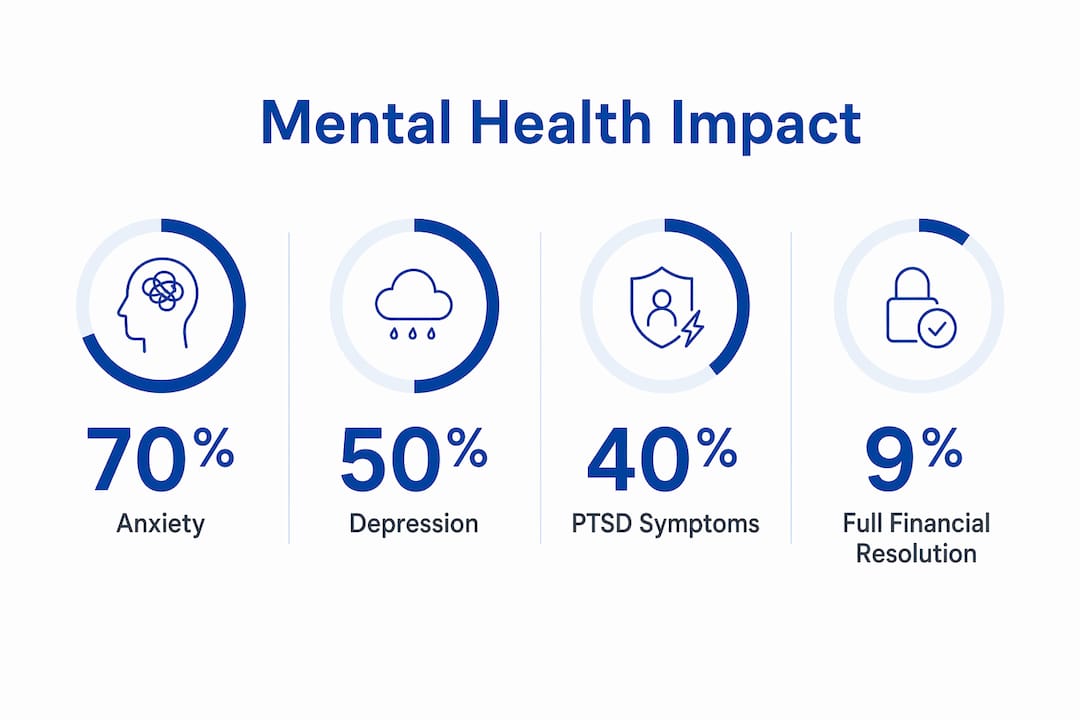
Only 9% of victims who experienced measurable financial harm reported full case resolution. For victims facing multiple financial consequences, that resolution rate dropped to 0%. Those numbers reveal a painful truth: most victims are left managing both financial damage and emotional distress simultaneously, with no clear endpoint in sight.
The Identity Theft Resource Center managed 9,253 cases from over 6,000 individuals between 2025 and 2026. That volume reflects just how complex and prolonged the recovery process actually is. Each unresolved case represents a person still living under the weight of uncertainty.
The table below shows how resolution outcomes connect to emotional burden:
| Resolution outcome | Emotional impact |
|---|---|
| Full financial resolution | Reduced anxiety; faster return to baseline trust |
| Partial resolution | Persistent low-grade anxiety and hypervigilance |
| No resolution | Chronic stress, depression, and distrust of institutions |
| Multiple financial consequences | Highest distress; 0% full resolution rate reported |
Modern identity theft also operates as a chain reaction across accounts, meaning one breach often triggers several others. Each new discovery resets the emotional clock. Victims do not get to heal in a straight line when new damage keeps appearing.
Why do shame and distrust persist after financial recovery?
Financial recovery does not erase the emotional damage. Many victims find that even after their accounts are restored, the feelings of betrayal and distrust remain. This is one of the most misunderstood aspects of the psychological effects of identity theft.
Fraud victimization is characterized more by betrayal, shame, and trust erosion than by the size of the financial loss. Self-blame is a major barrier to recovery. Victims often ask themselves what they did wrong, even when the breach was entirely outside their control. That internal narrative delays healing and discourages people from seeking support.
Institutions add another layer of harm. Victims frequently describe navigating banks, credit bureaus, and government agencies as a “second victimization.” The bureaucratic process causes as much stress as the theft itself, and fear often persists long after the technical issues are resolved. Timely, transparent communication from institutions can reduce this distress, but proactive breach notification remains underused across most organizations.
“Recovery is rarely linear. Reputational damage causes ongoing fragile mental health even after finances are restored. The cycle of self-blame must be broken with support from loved ones and professionals.”
Stolen lives: identity theft victim experiences
Trust erosion also extends to personal relationships and social media identity fraud, where victims may pull back from digital platforms entirely. That withdrawal can increase isolation, which worsens depression. Trauma-informed counseling specifically addresses these patterns and helps victims rebuild trust at a pace that feels safe.
Pro Tip: If you find yourself avoiding all online activity out of fear, that avoidance is a symptom worth discussing with a mental health professional. Controlled, gradual re-engagement is more effective than total withdrawal.
How can you support your mental health during identity theft recovery?
Recovery from identity theft requires attention to both your financial situation and your emotional well-being. The two are connected, but they need separate, deliberate care. The steps below give you a practical framework for protecting your mental health while you work through the recovery process.
Seek professional mental health support. A therapist who specializes in trauma or crime victimization can help you process the violation and develop coping tools. Cognitive behavioral therapy (CBT) is particularly effective for anxiety and PTSD symptoms linked to identity fraud and anxiety.
Contact a dedicated victim support center. The Identity Theft Resource Center offers free, one-on-one case assistance. Their advisors understand both the practical and emotional dimensions of recovery. The VA also provides mental health resources for fraud victims, including tips for normalizing your emotional responses.
Organize your documentation. Create a single folder, physical or digital, containing all correspondence, case numbers, and timelines. Disorganization fuels anxiety. Having a clear record reduces the mental load and gives you a sense of control over a chaotic situation.
Join a peer support group. Connecting with others who have experienced identity theft reduces isolation and shame. Hearing that your reactions are shared by others is a powerful normalizing force. Many community organizations and online forums host these groups at no cost.
Practice consistent self-care. Sleep, physical activity, and reduced caffeine intake directly affect anxiety levels. These are not optional extras. They are foundational to your ability to manage stress during a prolonged recovery.
Monitor your digital exposure proactively. Understanding your dark web identity exposure can replace vague dread with specific, manageable tasks. Knowing exactly what has been compromised is less stressful than imagining the worst. A secure online presence also reduces the risk of repeat victimization, which is a major source of ongoing anxiety.
The emotional responses you feel are normal reactions to an invasive crime. Naming them as such, rather than as personal failures, is where recovery begins.
Key Takeaways
Identity theft causes documented clinical levels of anxiety, depression, and PTSD, and emotional recovery requires as much deliberate attention as financial restoration.
| Point | Details |
|---|---|
| Clinical symptoms are real | Victims score in moderate-to-severe ranges for depression, anxiety, and PTSD on clinical scales. |
| Resolution rates are low | Only 9% of financially harmed victims achieve full case resolution, prolonging emotional distress. |
| Shame outlasts financial loss | Self-blame and distrust persist even after accounts are restored, requiring trauma-informed support. |
| Bureaucracy adds trauma | Navigating institutions causes a “second victimization” that compounds the original emotional harm. |
| Recovery needs a dual approach | Combining financial remediation with professional mental health support produces better outcomes. |
What I’ve learned working with identity theft victims every day
At Sidenty, we work with people whose digital identities have been violated, and the pattern we see most often surprises people. Victims come to us focused entirely on removing the content or stopping the fraud. That urgency is completely understandable. But within weeks, the emotional weight becomes the harder problem to solve.
The financial piece has a process. You file reports, dispute charges, and work through institutions. The emotional piece has no checklist. Victims describe a persistent low-level dread that does not go away once the accounts are clean. They check their credit reports compulsively. They distrust platforms they used to rely on. They feel embarrassed telling people what happened, which cuts them off from the support they need most.
What I believe, based on what we see, is that the mental health effects of crime like identity theft are still dramatically underestimated. The conversation in most recovery guides stops at “here is how to file a dispute.” That is not enough. Victims need to hear clearly that what they are feeling is a recognized psychological response to trauma, not a personal weakness.
The most effective path forward combines active identity protection with genuine emotional support. Neither alone is sufficient. If you are in recovery right now, please treat your mental health as seriously as your credit report. Both deserve your attention.
— Sidenty
Sidenty’s approach to digital identity protection
If you are dealing with the aftermath of identity theft, having a clear protection plan reduces both your risk and your anxiety.
Sidenty provides professional digital identity protection built around your specific situation, not a generic checklist. From unauthorized content removal to deepfake prevention, Sidenty’s team of legal experts handles the technical and legal complexity so you can focus on recovery. With a 99.8% success rate in content removal, Sidenty gives you a concrete, reliable process when everything else feels uncertain. Visit Sidenty to learn how personalized identity protection can reduce the ongoing stress of staying safe online.
FAQ
What are the main psychological effects of identity theft?
Identity theft causes anxiety, depression, and PTSD at clinically measurable levels. Victims also commonly experience shame, anger, hypervigilance, and a lasting erosion of trust in institutions and digital platforms.
How long do mental health effects last after identity theft?
The emotional impact often persists well beyond financial resolution. Reputational damage and system errors can sustain fragile mental health for months or years, particularly without professional support.
Why do victims feel shame even when the theft was not their fault?
Self-blame is a recognized psychological response to fraud victimization. Research identifies it as a major barrier to seeking help, and trauma-informed counseling is the most effective way to address it directly.
What mental health resources are available for identity theft victims?
The Identity Theft Resource Center offers free case assistance with emotional support components. The VA provides specific mental health guidance for fraud victims, and many therapists specialize in crime-related trauma and PTSD.
Does resolving the financial damage fix the mental health impact?
Financial resolution helps, but it does not eliminate emotional distress on its own. Studies show that fear and distrust frequently persist after technical resolution, making dedicated mental health support a necessary part of full recovery.