
Digital privacy for influencers is defined as the deliberate control of how your personal and professional information is collected, shared, and used online to protect your identity, reputation, and safety. Understanding what digital privacy means for influencers goes far beyond locking down a profile. The January 2026 Instagram breach exposed data from 17.5 million accounts, and ransomware targeting information-sector creators has risen 100% in recent years. These numbers signal a clear reality: your visibility as a creator makes you a target, and your privacy is your first line of defense.
What digital privacy risks do influencers face today?
Influencer digital privacy risks are more varied and serious than most creators expect. Your public presence is an asset, but it also creates a map that bad actors can follow directly to your front door.
The most common threats include:
- Doxxing: Strangers compile your real name, home address, phone number, and daily routine from scattered public posts, then publish it to cause harm.
- Identity theft: Fraudsters use your name, photos, and personal details to open accounts, sign fake brand deals, or impersonate you to your audience.
- Account breaches: Weak or reused passwords give attackers access to your monetized accounts, subscriber lists, and direct messages.
- Targeted harassment campaigns: Coordinated groups use your public information to flood your inbox, contact your sponsors, or threaten your family.
- AI-generated deepfakes: Tools like Meta AI image generators and Grok have raised serious concerns around non-consensual image creation, putting creators at direct risk.
The scale of the problem is significant. UK businesses report a 43% annual cyber attack rate, and creators in the information sector face a ransomware threat that has doubled. That doubling matters because it shows attackers now see creators as profitable targets, not just incidental victims.
Careless sharing accelerates every one of these risks. A photo with a recognizable street sign in the background, a story filmed near your home gym, or a check-in at your regular coffee shop can each reveal your location. Individually, these details seem harmless. Connected together, they give a determined person everything they need.
How do social media platforms and policies affect influencer privacy?
Platform data collection is the most overlooked privacy risk for creators. Every platform you use collects behavioral data, location signals, device identifiers, and content metadata. Most of that collection happens by default, and most creators never change a single setting.

Creator platform privacy settings default to maximum data sharing. Industry experts recommend switching every available setting to opt-in rather than opt-out. This single change reduces how much of your data gets shared with third-party advertisers and AI training pipelines.
Two major legal frameworks directly affect your data rights as a creator:
- GDPR (General Data Protection Regulation): Applies to any creator with European followers. Gives individuals the right to request data deletion and limits how platforms can use personal data without consent.
- CCPA (California Consumer Privacy Act): Applies to creators based in California or with significant California audiences. Grants the right to know what data is collected and to opt out of its sale.
Understanding these laws matters because they give you legal standing to demand data removal from platforms and third parties. Ignoring them means leaving rights unused.
AI tools have added a new layer of complexity. Public content you post can be scraped and used to train AI models without your knowledge or consent. The rise of AI-driven data scraping has fundamentally changed the privacy calculation for creators. Posting publicly no longer means just sharing with followers. It can mean feeding your likeness and voice into systems you have no control over.
Pro Tip: Review your platform privacy settings every 90 days. Platforms update their policies frequently, and new data-sharing options often default to “on” after updates.
What practical privacy strategies can influencers use?
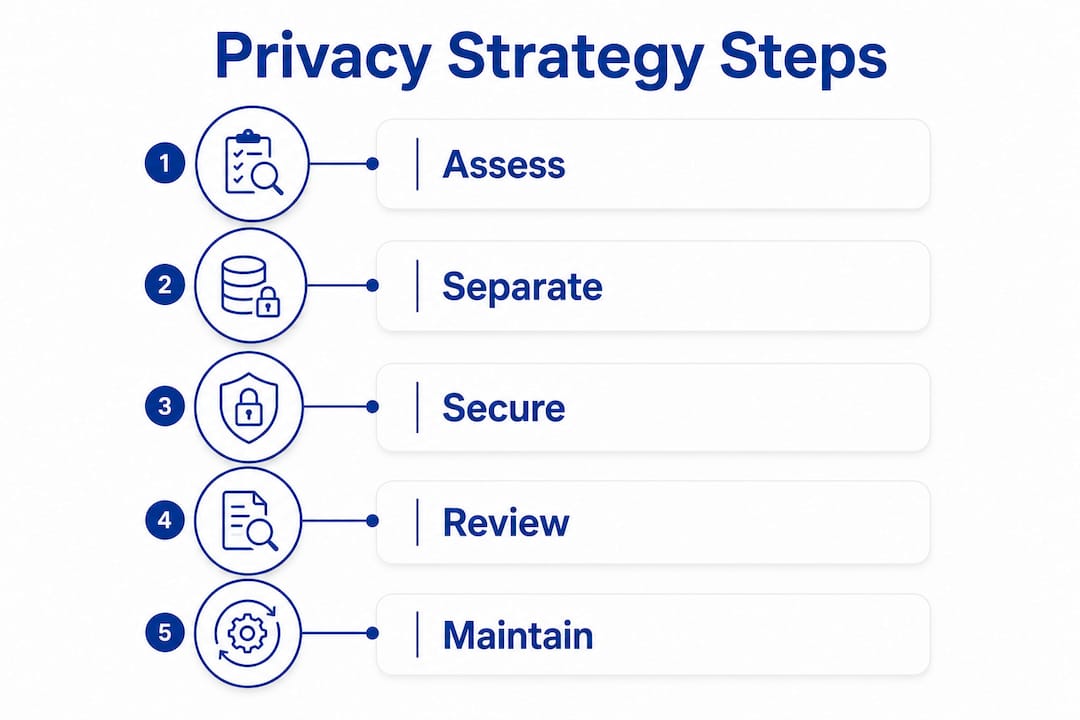
Protecting your privacy as an influencer does not require going offline. It requires building deliberate habits and using the right tools consistently.
Separate your personal and professional identities. Use a dedicated email address, phone number, and mailing address for all brand and business communications. A virtual address or P.O. box keeps your home address off public records and brand contracts.
Enable app-based two-factor authentication (2FA) on every account. App-based 2FA (using apps like Google Authenticator or Authy) is significantly more secure than SMS codes, which can be intercepted through SIM-swapping attacks.
Use a VPN on public and home networks. A VPN masks your IP address, making it harder for trackers to link your browsing behavior to your real location or identity.
Use a password manager. A password manager generates and stores unique, complex passwords for every account. Reusing passwords across platforms is one of the fastest ways to lose multiple accounts in a single breach.
Subscribe to an automated data scrubbing service. Data brokers collect and repopulate your personal information even after you manually remove it. Manual opt-out from data broker sites takes 10–15 hours and must be repeated periodically. Automated services manage removals from over 100 data broker sites for approximately $8.33 per month. That cost is far lower than the damage a doxxing incident causes.
Audit your digital footprint regularly. Search your name, username, and email address in Google and data broker sites quarterly. Check what a stranger can find about you in five minutes.
The core principle of privacy is not hiding everything. It is breaking the links between data points. A reused username, a photo with a recognizable background, and a linked email address can each seem harmless alone. Together, they can expose your real identity. Sidenty’s digital identity protection resources walk through exactly how to audit and break those links.
How can influencers balance visibility and privacy?
Visibility and exposure are not the same thing. Visibility means your content reaches the right audience. Exposure means your personal information reaches people who can harm you. The goal is maximum visibility with minimum exposure.
“Privacy is not about hiding who you are. It’s about controlling what connects to you. A creator can be fully public-facing while keeping their home address, real name, and personal relationships completely separate from their professional identity.”
Creators who treat privacy as a brand asset attract better partnerships. Brands increasingly demand privacy guarantees from creators to reduce their own legal and reputational risks. A creator who can demonstrate clear data handling practices, secure audience data, and contractual privacy standards becomes a lower-risk partner. That translates directly into more deals and better terms.
Practical steps for building a privacy-first brand include:
- Audit every third-party vendor you use, from email marketing tools to affiliate platforms. Vendors’ verified security protects your reputation when their systems handle your audience’s data.
- Include privacy clauses in every brand contract. Require that partners do not share your personal data with additional third parties without written consent.
- Be deliberate about timing and location sharing. Post location content after you have left a place, not while you are there.
- Review your social media identity risks periodically to stay ahead of new fraud patterns targeting creators.
The cultural shift among creators is real. More influencers are publicly discussing their privacy boundaries, normalizing the idea that a creator does not owe their audience access to every corner of their life. That shift protects creators and sets a healthier standard for the industry.
Key Takeaways
Digital privacy for influencers is the active control of personal and professional data to prevent doxxing, identity theft, and reputational harm, and it requires both technical tools and deliberate behavioral habits.
| Point | Details |
|---|---|
| Privacy means controlling data links | Break connections between usernames, emails, and photos rather than hiding all content. |
| Platform defaults expose you | Switch every available setting to opt-in to reduce unauthorized data sharing and AI training. |
| Automated scrubbing is non-negotiable | Manual data broker removal takes 10–15 hours and must be repeated; automation costs about $8.33/month. |
| Privacy attracts brand deals | Brands demand privacy guarantees from creators, making privacy a direct business asset. |
| Vendor audits protect your audience | Contractually bind every third-party vendor to strict privacy standards to avoid liability. |
Sidenty’s take: privacy is a career strategy, not a restriction
The most common misconception Sidenty sees from creators is that privacy means becoming less authentic or less accessible. That belief costs creators real money and real safety.
Privacy done right is invisible to your audience. Your followers see your content, your personality, and your story. They do not need your home address, your legal name, or your personal email to feel connected to you. The creators who conflate openness with exposure are the ones who end up dealing with stalkers, impersonators, and data breaches that derail their careers.
The creators who build long-term, sustainable careers treat privacy as infrastructure. They set it up once, maintain it regularly, and never have to scramble after a crisis. The technical side, including 2FA, VPNs, and data scrubbing, takes a few hours to set up. The behavioral side, including separating identities and auditing vendors, becomes second nature within weeks.
What Sidenty has observed consistently is that privacy-first creators are also the most confident creators. They post without fear because they know their personal information is not exposed. That confidence shows in their content, and their audiences respond to it.
Privacy is not a cage. It is the foundation that lets you show up fully without putting yourself at risk.
— Sidenty
Sidenty’s protection tools for influencer digital identity
Your content and your identity are your business. When either gets compromised, the damage moves fast.
Sidenty specializes in protecting creators from the exact threats covered here, including unauthorized content removal, deepfake prevention, and digital identity protection tailored to influencers on platforms like OnlyFans, Twitch, and Instagram. With a 99.8% success rate in content removal, Sidenty’s team of legal experts handles the hard work so you can focus on creating. If your personal information is already circulating where it should not be, or if you want to get ahead of the risk before something goes wrong, Sidenty’s creator protection services are built for exactly that situation.
FAQ
What does digital privacy mean for influencers?
Digital privacy for influencers means actively controlling how your personal and professional information is collected, shared, and used online to prevent doxxing, identity theft, and harassment.
What are the biggest privacy risks influencers face?
The biggest risks include doxxing, account breaches, identity theft, targeted harassment, and AI-generated deepfakes that use public content without consent.
How do privacy settings protect influencers on social media?
Switching platform settings from opt-out to opt-in reduces unauthorized data sharing with advertisers and AI training systems, limiting how much of your data leaves the platform.
How can influencers remove their data from data broker sites?
Manual removal from data broker sites takes 10–15 hours and must be repeated regularly. Automated data scrubbing services handle removals from over 100 broker sites for approximately $8.33 per month.
Does being private hurt an influencer’s brand?
No. Brands increasingly require privacy guarantees from creators, making a privacy-first approach a direct advantage in securing partnerships and protecting audience trust.