
Dark web identity exposure is defined as the presence or inferability of your personal information within hidden online networks where criminals actively trade, sell, or exploit it. Your Social Security number, passwords, medical records, and even your behavioral patterns can all end up in these markets without your knowledge. The risks are not theoretical. Social Security numbers sell for as little as $1 to $6, while complete identity packages called “fullz” go for $20 to $100. Understanding what dark web identity exposure means is the first step toward doing something about it. Sidenty works with individuals and creators every day who discover their data has been compromised, and the pattern is always the same: the exposure happened long before anyone noticed.
What is dark web identity exposure and how does data get there?
Personal data reaches the dark web through several distinct channels, and most people are surprised to learn they contributed to at least one of them. The most common route is a corporate data breach, where a company storing your information gets hacked and millions of records leak at once. Retailers, healthcare providers, and social media platforms have all suffered breaches that pushed personal data onto dark web marketplaces.
Beyond corporate breaches, individual attack vectors are just as dangerous:
- Phishing emails trick you into entering credentials on fake login pages that look identical to real ones.
- Malware and infostealers silently harvest passwords, session cookies, and autofill data from your browser.
- Stolen or lost devices give criminals direct access to stored accounts and saved passwords.
- Data broker aggregation compiles your public records, social media activity, and purchase history into profiles that get resold.
The categories of data most commonly found on dark web markets include Social Security numbers, email and password combinations, passport scans, medical records, bank account details, and digital identity documents. Each category carries a different price and a different level of damage potential.
Pro Tip: Set up breach notification alerts through services like Have I Been Pwned so you receive an immediate alert the moment your email address appears in a known data breach.
What do criminals actually do with your exposed identity?
Criminals treat stolen identity data as a commodity with a clear price list. Medical records fetch up to $1,000 each on the dark web, far more than credit cards, because they are permanent and enable long-term fraud. A stolen credit card with a $5,000 limit sells for around $110, while individual passport scans go for approximately $32.
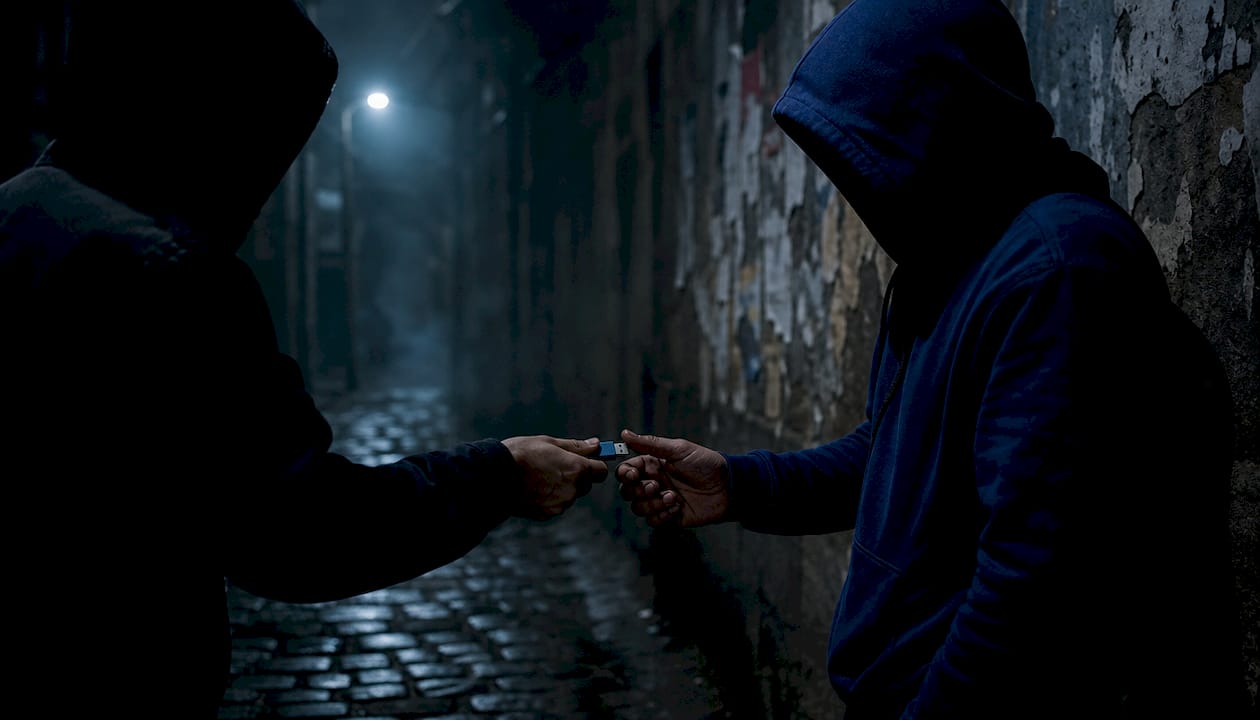
The concept of “fullz” is central to understanding how identity theft dark web operations work. A “fullz” package contains everything a criminal needs to fully impersonate you: your name, address, Social Security number, date of birth, and financial account details. Criminals use these packages to open fraudulent credit lines, file false tax returns, and apply for loans in your name.
| Data type | Approximate dark web price | Primary criminal use |
|---|---|---|
| Social Security number | $1–$6 | Tax fraud, loan applications |
| Full identity “fullz” | $20–$100 | Account takeovers, credit fraud |
| Credit card ($5,000 limit) | $110 | Unauthorized purchases |
| Medical record | Up to $1,000 | Insurance fraud, prescription fraud |
| Passport scan | $32 | Identity verification bypass |
Medical identity theft deserves special attention because it is the hardest to fix. Medical identity theft can take nine months to detect and requires extensive recovery. Unlike a canceled credit card, your medical history cannot be reset. Criminals use stolen records to receive care, prescriptions, or insurance payouts under your name, leaving you with corrupted health records that can affect future treatment.
“Stolen credentials are used not only for financial crimes but also to bypass multi-factor authentication via session cookies, making credential theft far more impactful than most people realize. Infostealer malware now harvests millions of credentials every month.”
The impact of dark web exposure extends well beyond your bank account. Criminals build fake social media profiles, launch targeted phishing campaigns against your contacts, and sell your data multiple times to different buyers. The emotional toll on victims is real: the sense of violation, the hours spent disputing fraudulent accounts, and the uncertainty about what else may still be circulating.
How does identity exposure happen beyond direct data leaks?
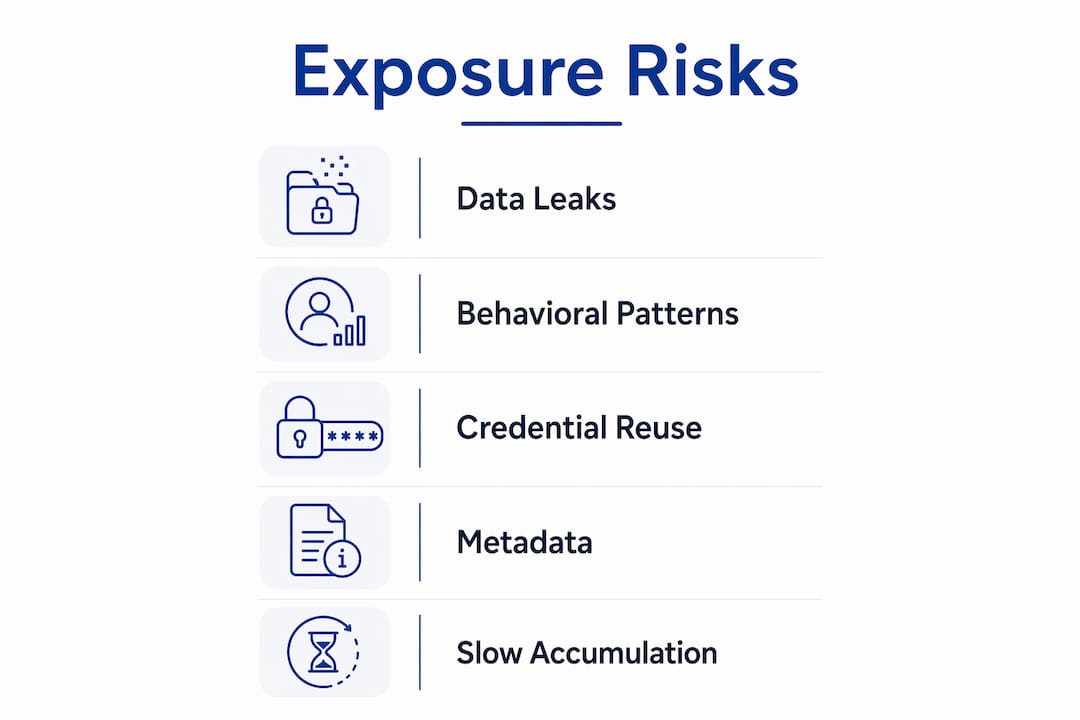
The most underestimated dark web exposure risk is behavioral, not technical. Most people assume that using a VPN or the Tor browser makes them anonymous. That assumption is wrong. Behavioral leaks such as consistent timing, writing style, and access patterns create identity fingerprints that criminals can analyze to infer your real identity even through encrypted connections.
Think of it this way: if you always log into a forum at 9:00 PM on weekdays, write in a distinctive style, and use the same username structure across platforms, those patterns form a profile. Attackers correlate metadata across sessions to de-anonymize users. This process does not require breaking encryption. It requires patience and pattern recognition.
Common behavioral mistakes that contribute to exposure include:
- Reusing usernames across public and private platforms, creating a traceable thread.
- Consistent login timing that reveals your time zone, routine, and even location.
- Writing style analysis, where distinctive phrasing or vocabulary links accounts together.
- Metadata in uploaded files, such as GPS coordinates embedded in photos or document author names in PDFs.
- Trusting anonymity tools completely, without understanding their limitations.
Identity exposure is often a slow, cumulative process. No single action exposes you. Instead, dozens of small behavioral signals accumulate over months or years until a determined attacker can connect them into a complete picture. This is why online privacy risks are especially acute for public figures and content creators who maintain consistent online presences.
Pro Tip: Before uploading any document or photo, strip its metadata using a tool like ExifTool or your operating system’s built-in file properties editor. This removes hidden location and device data that can identify you.
What should you do if your identity is found on the dark web?
Finding your information on the dark web feels like a gut punch. The good news is that fast, deliberate action significantly limits the damage. Follow these steps in order.
- Change all compromised passwords immediately. Use a unique, complex password for every account. A password manager like Bitwarden or 1Password makes this manageable.
- Enable multi-factor authentication on every account. MFA adds a second verification step that stops most credential-based attacks even when your password is known.
- Freeze your credit reports with all three major bureaus: Equifax, Experian, and TransUnion. A credit freeze prevents anyone from opening new credit lines in your name.
- Place fraud alerts with the credit bureaus. Fraud alerts instruct creditors to verify your identity before extending any credit, adding a layer of scrutiny to new applications.
- Report to IdentityTheft.gov. The Federal Trade Commission’s IdentityTheft.gov recovery plan generates a personalized action plan and pre-filled dispute letters based on your specific situation.
- Monitor your accounts actively. Review bank statements, credit card transactions, and medical explanation-of-benefits documents weekly for at least six months after exposure.
- Enroll in a dark web monitoring service. These services scan known dark web markets and alert you when new instances of your data appear.
Stolen data often circulates for years after it first appears on the dark web. A single breach from three years ago can still be generating fraud today. This means your response cannot be a one-time event. Preventing identity exposure requires building permanent security habits, not just reacting to individual incidents.
Pro Tip: Set a calendar reminder every 90 days to check your credit reports at AnnualCreditReport.com. You are entitled to free weekly reports from all three major bureaus, and regular checks catch fraudulent accounts before they spiral.
Key Takeaways
Dark web identity exposure is a behavioral and technical threat that requires permanent security discipline, not just a one-time response after a breach is discovered.
| Point | Details |
|---|---|
| Exposure goes beyond breaches | Behavioral patterns like login timing and writing style can expose identity even through encrypted tools. |
| Data has a clear market price | Medical records sell for up to $1,000 each, making health data the highest-value target for criminals. |
| Act fast after discovery | Change passwords, enable MFA, freeze credit, and report to IdentityTheft.gov immediately upon finding exposed data. |
| Monitoring is an early warning | Dark web monitoring alerts you to exposure but cannot prevent it or remove already-circulating data. |
| Zero trust protects you | Treat every network and service as potentially compromised and verify identity at every access point. |
What most people get wrong about dark web risks
Working with clients who have experienced identity exposure, I have noticed one consistent misconception: people believe that monitoring solves the problem. It does not. Dark web monitoring is an early-warning system, not a fix. By the time an alert fires, your data is already circulating. The alert tells you to act. It does not undo the exposure.
The second misconception is that technical tools guarantee anonymity. VPNs and Tor reduce your attack surface. They do not eliminate it. The real vulnerability is behavioral. Routine, consistency, and habit create the fingerprints that attackers exploit. I have seen cases where a creator’s real identity was inferred purely from the timing of their posts and the vocabulary they used across platforms.
The mindset shift that actually works is zero trust security. Assume your credentials will eventually be compromised. Build your security posture around that assumption. Use MFA everywhere. Use unique passwords everywhere. Limit what you share, even on platforms you trust. The zero trust framework recognizes that credential theft is inevitable and focuses on limiting the damage when it happens, not on preventing it entirely. That is the honest, practical approach to protecting your identity in 2026.
— Sidenty
How Sidenty supports your digital identity protection
When your personal data surfaces on the dark web, knowing what to do next is only half the battle. Having expert support to act on it quickly makes the real difference.
Sidenty provides personalized digital identity protection for individuals and content creators who face the highest exposure risks. Services cover breach response, unauthorized content removal, deepfake prevention, and ongoing identity monitoring. With a 99.8% success rate in content removal, Sidenty’s team of legal and technical experts builds a response plan tailored to your specific situation. Whether you are dealing with leaked content, fraudulent accounts, or data circulating on hidden networks, Sidenty’s identity protection services give you a clear path forward. You do not have to figure this out alone.
FAQ
What is dark web identity exposure?
Dark web identity exposure is the presence or inferability of your personal data within hidden online networks where criminals trade and exploit it. It includes both direct data leaks and behavioral patterns that allow criminals to identify you.
How do I know if my identity is on the dark web?
Dark web monitoring services scan known markets and alert you when your email, passwords, or personal data appear. You can also check breach databases like Have I Been Pwned for free.
What data is most valuable to criminals on the dark web?
Medical records are the most valuable, fetching up to $1,000 each, followed by complete identity packages (“fullz”) at $20 to $100, and credit card data at around $110 per card.
Can I remove my information from the dark web?
You cannot fully remove data once it circulates on the dark web. You can limit further damage by changing credentials, freezing credit, and reporting to IdentityTheft.gov for a personalized recovery plan.
Does using a VPN protect me from dark web identity exposure?
A VPN reduces your exposure but does not eliminate it. Behavioral patterns like timing and writing style can still identify you even through encrypted connections, making security habits more important than any single tool.