
Brand deal risks from identity theft are defined as the financial and reputational damage creators suffer when attackers misuse their identity or brand partnerships to commit fraud. 63% of consumers blame authentic brands for impersonation attacks, and 38% of victims cut brand ties after a single scam experience. That means one fraudulent deal can cost you both your audience’s trust and your income. Endorsement fraud and deepfake impersonation have made this threat more serious than ever, and creators who treat security as an afterthought pay the steepest price.
1. What common identity theft scams target creators in brand deals?
Identity theft in brand deals follows recognizable patterns. Knowing them puts you ahead of most scammers before they even reach your inbox.
The most common tactics include:
- Phishing outreach: A fake “brand rep” emails you a contract PDF. The attachment contains malware that harvests your login credentials or financial data.
- Fake brand impersonation: Scammers clone a real brand’s email domain, sometimes changing one letter, and send official-looking deal offers.
- Upfront payment demands: No legitimate brand requires upfront shipping fees, “verification payments,” or product deposits at deal initiation. Any request for money before a signed contract is a scam signal.
- Credential harvesting: Fraudsters ask for your social media login “to verify your account” or “set up the campaign.” Real brands never need your password.
- Deepfake impersonation: Scammers generate AI video or audio of you appearing to endorse a product you never agreed to promote. This damages your reputation without your knowledge.
Red flags to watch for: requests for your PayPal login, vague contract language, pressure to sign quickly, and outreach from Gmail or Yahoo addresses instead of corporate domains.
Pro Tip: Search the brand’s official website independently before responding to any deal outreach. If the contact email does not match the domain on their official site, treat it as fraudulent until proven otherwise.
2. How can creators protect their personal and deal information?
Protecting your deal information requires specific habits, not general caution. Here are the steps that actually reduce your exposure.
- Use encrypted communication channels. Standard platform DMs are not end-to-end encrypted and expose your negotiated rates and contract terms to interception. Move sensitive deal conversations to Signal or a secure business email service.
- Enable two-factor authentication (2FA) on every account. Your email, Instagram, TikTok, and any platform tied to brand revenue should require a second verification step. Use an authenticator app, not SMS, since SIM swapping is a known attack vector.
- Create unique passwords for every platform. A password manager like Bitwarden or 1Password generates and stores complex passwords so you never reuse credentials across accounts.
- Audit your active agreements. Review endorsement contracts for clauses that address unauthorized likeness use and deepfake protection. Flag any agreement that lacks these provisions and request renegotiation.
- Never share deal details over unencrypted channels. Avoid discussing rates, deliverables, or payment terms through Instagram DMs, Twitter messages, or standard SMS.
- Set up credential monitoring. Services that scan the dark web for your email address or login credentials alert you the moment your data appears in a breach. Early detection limits the damage.
Pro Tip: Create a dedicated business email address used only for brand deal correspondence. Keeping it separate from your personal email reduces the attack surface and makes phishing attempts easier to spot.
3. What industry trends are shaping brand deal security?
The economics of brand partnerships have shifted because of fraud. Creators who understand these trends negotiate better and protect themselves more effectively.
Insurance premiums for endorsement deals increased 8–12% over 18 months due to scam prevalence. That cost gets passed down the chain, affecting what brands offer creators and how deals are structured.
The concept of a “trust tax” has entered deal negotiations. Consumer skepticism conditioned by scams adds legal fees, extended timelines, and verification costs to every legitimate partnership. This trust tax adds 5–8% to partnership costs, but it is still less damaging than the 15–25% value erosion that follows a trust breakdown.
Brands are responding by investing in authentication infrastructure. Brands will allocate 3–5% of total deal value to authentication systems by Q4 2026. This means longer negotiation timelines and more documentation requirements for creators.
| Trend | Impact on creators | Response |
|---|---|---|
| Rising insurance premiums | Higher deal costs passed to creators | Build fraud clauses into contracts early |
| Trust tax | Slower deal closings, more scrutiny | Maintain a verified public endorsement record |
| Authentication budgets | More verification steps required | Prepare identity documents and signed media kits |
| Deepfake proliferation | Likeness misuse without consent | Include deepfake protection clauses in every deal |
Deepfakes undermine the scarcity and authenticity that make genuine endorsements valuable. When a fake version of you appears to endorse a product, the economic value of your real endorsements drops.
4. How can creators vet brand partners and negotiate secure deals?
Vetting a brand before signing protects you from fraud and positions you as a professional. Brands that resist basic verification are not worth your time.
Use these checks before engaging with any outreach:
- Verify the domain. Run a WHOIS lookup on the brand’s email domain. Domains registered within the last few months are a red flag for scam operations.
- Check their social presence. A real brand has consistent posting history, verified accounts where applicable, and public contact information that matches the outreach you received.
- Reject upfront payment demands immediately. Legitimate brands never request “test” product payments or verification fees before a contract is signed.
- Require deepfake and likeness protection clauses. Any contract that does not explicitly prohibit unauthorized use of your image, voice, or AI-generated likeness needs revision before you sign.
- Establish takedown contingencies. Your contract should specify who is responsible for removing unauthorized content and within what timeframe. Contracts must include clear workflows and timetables for disclosure reviews and corrective takedowns.
- Negotiate indemnification provisions. Legal infrastructure for brand partnerships must match deal complexity. Indemnification clauses protect you if the brand’s misuse of your identity causes third-party claims against you.
- Create a public endorsement registry. Publish a page on your website listing your current and past brand partners. This lets your audience verify which deals are real and flags unauthorized use quickly.
Pro Tip: Ask every new brand partner to sign a mutual verification agreement before negotiations begin. This simple step filters out fraudulent outreach fast, since scammers will not agree to identity verification.
5. What should creators do if they suspect fraud in a brand deal?
Suspecting fraud feels like a gut punch. The right response is fast and methodical, not panicked.
- Disconnect the device immediately. If you opened a suspicious attachment or clicked an unknown link, disconnect from Wi-Fi and mobile data to stop any active data exfiltration.
- Run a malware scan. Use a reputable security tool to scan your device before reconnecting to any network or logging into any account.
- Change all compromised passwords. Immediately change passwords on your email, social media, and financial accounts. Enable 2FA on every account if you have not already.
- Notify the real brand. Contact the legitimate company through their official website contact page. They need to know their identity is being used to scam creators.
- Report to the platform. File a fraud report with the platform where the scam outreach originated. Instagram, TikTok, and YouTube all have reporting mechanisms for impersonation.
- Engage an identity protection service. A service like Sidenty can monitor for ongoing misuse of your likeness, flag deepfake content, and initiate takedown requests on your behalf.
- Consult a lawyer. If a fraudulent contract was signed or your likeness was used without consent, legal counsel can review your options and draft cease-and-desist notices.
- Document everything. Screenshot all communications, save email headers, and record dates and times. This documentation supports insurance claims, platform reports, and any regulatory filings.
Key Takeaways
Brand partnership security risks are rising fast, and the creators who protect themselves proactively suffer far less financial and reputational damage than those who respond only after an incident.
| Point | Details |
|---|---|
| Identity theft damages brand deals | 38% of scam victims cut brand ties permanently, making fraud prevention a direct income issue. |
| Encrypted channels are non-negotiable | Standard platform DMs expose deal terms; use Signal or secure business email for all negotiations. |
| Contracts must include deepfake clauses | Any agreement without explicit likeness and AI protection provisions needs renegotiation before signing. |
| Verify brands before engaging | Domain checks, social presence audits, and rejection of upfront fees filter out most scam outreach. |
| Fast response limits damage | Disconnecting devices, changing passwords, and filing reports immediately reduces the scope of any breach. |
What I’ve learned about creator security after years in this space
The creators I see get hurt the most are not the careless ones. They are the ambitious ones who move fast on opportunities without pausing to verify. A deal that looks real, feels urgent, and comes with a polished contract can still be fraudulent. Scammers have gotten very good at mimicking legitimacy.
The shift I recommend is treating security as part of your professional brand, not a separate task. Your identity is your most valuable asset. Protecting it is not paranoia. It is basic business practice.
The deepfake threat has changed the stakes significantly. When your likeness can be cloned and used to endorse products you never agreed to promote, the damage happens before you even know about it. Only 6% of companies have proactive solutions for impersonation attacks, and most learn about them through social media complaints. That is a reactive posture that costs far more than prevention.
Build your security habits now: encrypted communications, verified contracts, and a monitoring service watching for unauthorized use of your name and image. The creators who do this are not just protecting themselves. They are building the kind of professional reputation that attracts better brand partners.
— Sidenty
How Sidenty protects creators from brand deal fraud
Sidenty works specifically with content creators to monitor, detect, and remove unauthorized use of their identity across platforms.
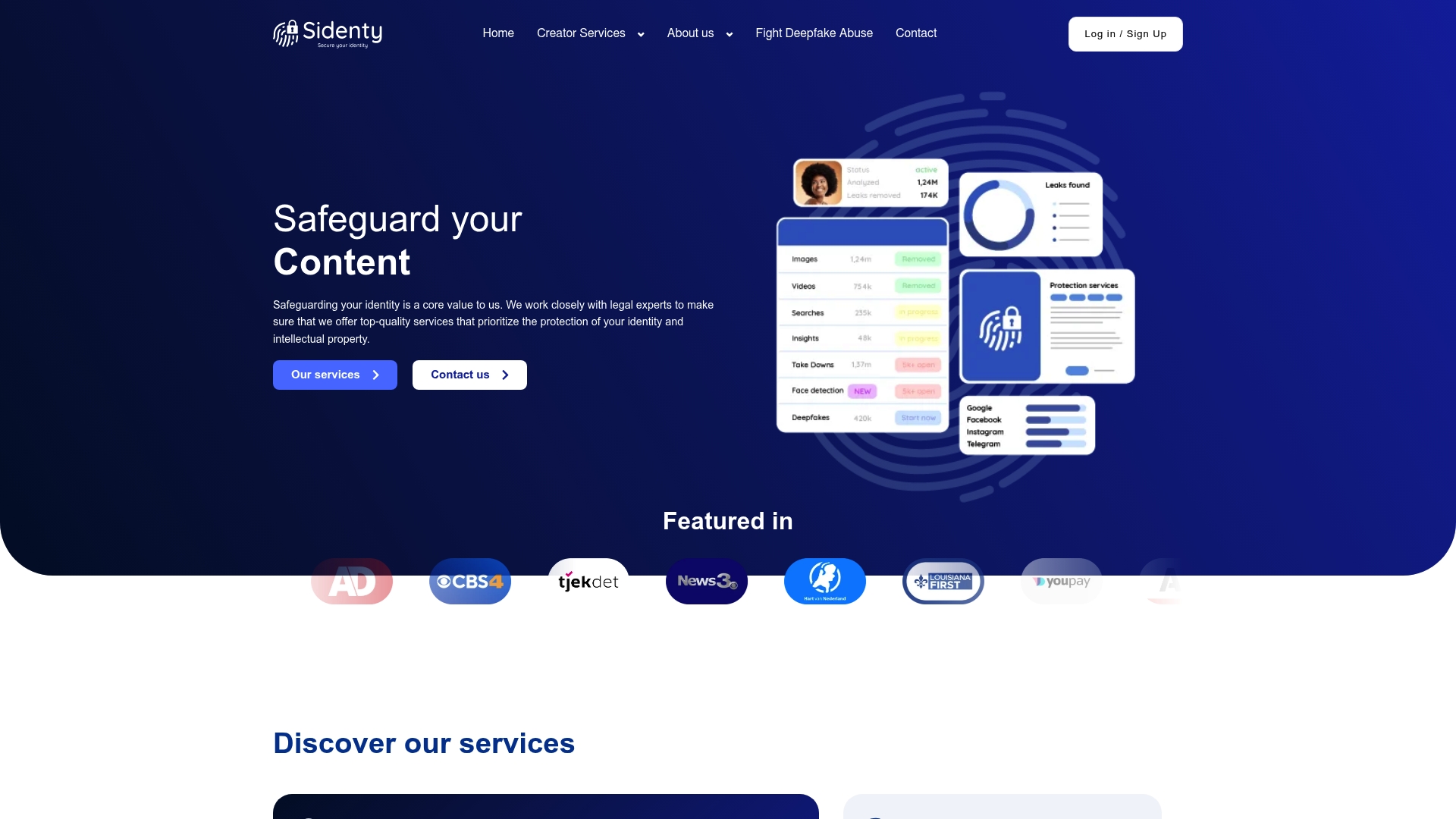
Sidenty’s team combines advanced monitoring technology with legal expertise to catch deepfake misuse, flag fraudulent endorsement scams, and file takedown requests with a 99.8% success rate in content removal. For creators navigating the growing complexity of brand partnerships, Sidenty offers deepfake removal services and personalized identity protection built around your specific situation. If your likeness has been misused or you want to get ahead of the risk, Sidenty gives you the tools and the team to act fast.
FAQ
What are the biggest brand deal risks from identity theft?
The biggest risks are reputational damage from deepfake impersonation, financial loss from phishing scams, and loss of brand partnerships when consumers associate your identity with fraud. 38% of scam victims permanently cut ties with the brands involved.
How do I spot a fake brand deal offer?
Fake brand deals typically demand upfront payments, request your social media login credentials, or arrive from non-corporate email addresses. No legitimate brand asks for fees or account access before a signed contract exists.
What should my brand deal contract include to prevent identity misuse?
Every contract should include explicit clauses prohibiting unauthorized use of your likeness, AI-generated impersonation, and deepfake creation. Indemnification provisions protect you if the brand’s actions create third-party claims against you.
How does identity theft affect the value of my brand partnerships?
Identity theft and deepfake fraud depreciate the economic value of genuine endorsements by undermining their authenticity. The resulting “trust tax” adds 5–8% to legitimate deal costs and can erode partnership value by 15–25% if trust breaks down.
Can I recover my reputation after a brand deal scam?
Yes, but speed matters. Reporting the fraud to platforms, notifying the real brand, and issuing a public statement quickly limits the damage. Working with an identity protection service like Sidenty to remove fraudulent content accelerates your recovery.