
Biometric data theft is the unauthorized acquisition of physical or behavioral identifiers — fingerprints, faceprints, voice patterns, iris scans — and its consequences are permanent. Unlike a compromised password you can reset in minutes, stolen biometric data cannot be revoked or reissued. Your face is your face. Your voice is your voice. Once that data is in someone else’s hands, the risk of impersonation, fraud, and identity abuse follows you for years, not days. For digital content creators who publish their faces and voices publicly every week, that permanence is not a theoretical concern. It is an active, growing threat.
Table of Contents
- Why biometric data theft hits digital creators differently
- How you can actively prevent biometric data theft
- What NIST Cybersecurity Framework 2.0 says about biometric data governance
- How Sidenty protects creators from biometric identity threats
- Key takeaways for creators protecting their biometric identity in 2026
- US privacy laws and legal consequences for biometric data theft
- Key Takeaways
Why biometric data theft hits digital creators differently
Most people think of biometric theft as something that happens to bank customers or government employees. For creators, the attack surface is far wider and far more personal.

Every video you post, every livestream you run, every podcast episode you release is a high-fidelity biometric sample. Researchers and security analysts now describe this as “personality theft”: attackers harvest your likeness and voice to generate unauthorized digital clones that look and sound exactly like you. Those clones can be used to run scams targeting your audience, produce content you never approved, or monetize your identity on platforms you have never touched.
The risks creators face are distinct from ordinary credential theft:
- Synthetic avatar creation: A single video or image is enough to generate a persistent synthetic avatar that can damage your reputation and earning potential for years.
- Biometric injection attacks: Attackers bypass camera-based verification by injecting deepfake data streams directly into software, rendering standard liveness checks useless.
- Institutional identity compromise: Because institutions treat biometrics as universal proof of personhood, stolen biometric data can compromise banking, platform verification, and account recovery flows simultaneously.
- Loss of platform control: Many creators do not control the biometric data stored on third-party platforms, governed by terms they never meaningfully consented to.
- Reputational and financial harm: Synthetic content tied to your likeness can destroy brand deals, follower trust, and monetization before you even know it exists. The privacy risks influencers face from this kind of misuse are well-documented and growing.
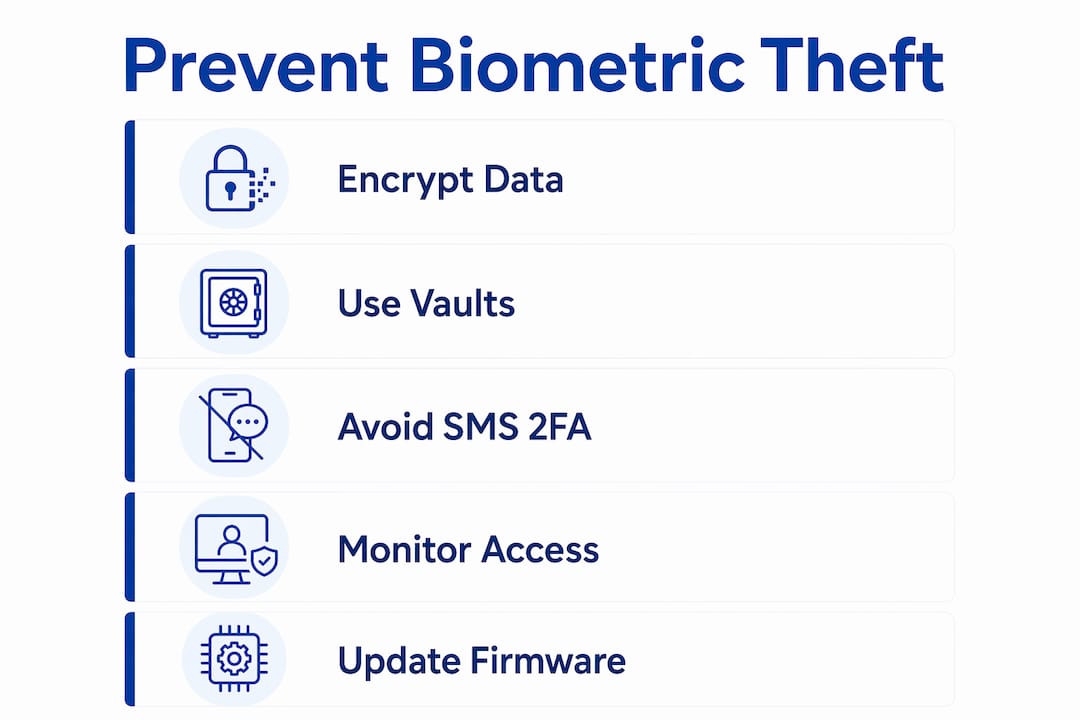
Pro Tip: Never use SMS-based two-factor authentication tied to your real phone number. Attackers can SIM-swap that number and gain access to accounts holding your biometric data. Use a hardware security key or an authenticator app instead.
How you can actively prevent biometric data theft
Prevention starts with treating your face and voice as credentials, not just content. Using voiceprints or faceprints as authentication factors is risky precisely because stolen samples allow attackers to impersonate you at the verification layer, not just the content layer.
Here are the most effective prevention strategies for creators:
- Avoid biometric authentication factors: Do not use face unlock or voice recognition as your primary login method on accounts holding sensitive data. Prefer hardware keys or authenticator apps.
- Degrade sample quality deliberately: Use co-hosted audio, illustrated avatars for thumbnails, or slightly compressed video to reduce the fidelity of biometric training data available to bad actors.
- Isolate biometric reference assets: Store face scans, voice prints, and high-resolution reference media in encrypted vaults completely separate from your publishing workflow.
- Assert consent and rights with platforms: Review every platform’s biometric data policy. Where possible, opt out of facial recognition features and submit formal rights requests for data deletion.
- Minimize high-fidelity exposure: Keep clips short, avoid extended uninterrupted voice recordings in public content, and use noise layering where practical.
Secure document and credential management is part of this picture too. Tools designed for secure document sharing can help creators manage sensitive identity assets without exposing them through ordinary publishing channels.
Pro Tip: Create a dedicated “biometric vault” — an encrypted, offline or air-gapped storage location for any high-resolution face scans, voice samples, or identity documents. Never store these in the same cloud account you use for content publishing.
What NIST Cybersecurity Framework 2.0 says about biometric data governance
The NIST Cybersecurity Framework 2.0 classifies biometric identity as high-sensitivity data requiring strict governance controls. For creators and the platforms they work with, this framework offers a practical baseline.
Key governance principles that apply directly to biometric data protection:
- Purpose limitation: Biometric data collected for one function (e.g., identity verification) must not be repurposed for analytics, advertising, or model training without explicit consent.
- Restricted access: Access to biometric templates must be limited to the minimum number of systems and personnel necessary.
- No template logging in analytics: Biometric templates must never be stored in broad analytics logs or general-purpose databases where access controls are weaker.
- Layered authentication: NIST guidance supports using biometrics as one factor within a layered approach, never as the sole recovery or authentication mechanism.
- Audit trails: Every access to biometric templates or enrollment records should be logged and auditable.
The framework’s Protect and Recover functions are especially relevant here. Biometric compromise is a long-tail risk, meaning the damage compounds over time rather than resolving after a single incident. Governance that treats biometric data as permanently sensitive, not just sensitive at the moment of collection, is the standard NIST 2.0 recommends.
How Sidenty protects creators from biometric identity threats
Sidenty was built specifically for the threat environment creators operate in. Its team combines advanced detection technology with legal expertise to address copyright infringement, unauthorized content distribution, and deepfake prevention at scale.
The numbers reflect the results. Sidenty achieves a 99.8% success rate in removing unauthorized content, covering everything from leaked media to synthetic deepfake content generated from stolen biometric data. That figure is not a marketing claim. It reflects thousands of removal actions across platforms including OnlyFans, Twitch, and major search engines.
What makes Sidenty’s model effective is its combination of speed and legal authority. DMCA notices, Google delisting requests, and hosting provider complaints are handled by a dedicated legal team, not automated scripts alone. Creators working with Sidenty get personalized case management, which matters when the content being removed is tied to their biometric likeness and every day of delay causes additional harm to follower trust and brand partnerships.
Key takeaways for creators protecting their biometric identity in 2026
Biometric data theft is permanent, and for creators who publish their faces and voices publicly, the risk of personality theft and synthetic avatar misuse is not hypothetical.
- Biometric data cannot be reset: Unlike passwords, stolen fingerprints, faceprints, and voice patterns create long-term impersonation risk with no straightforward remediation path.
- Creators are high-value targets: Every piece of public content is a potential biometric sample. Personality theft and synthetic avatar misuse are documented, growing threats.
- Compartmentalize aggressively: Keep biometric reference assets in isolated encrypted vaults, separate from all publishing workflows and cloud accounts.
- Avoid biometric authentication for sensitive accounts: Use hardware keys or authenticator apps instead of face or voice login wherever possible.
- Assert your legal rights: Review platform biometric data policies, submit deletion requests, and document every consent decision you make.
- Governance matters: NIST Cybersecurity Framework 2.0 provides a practical baseline for how biometric data should be collected, stored, and protected.
US privacy laws and legal consequences for biometric data theft
The United States does not have a single federal biometric privacy law, but several state statutes and federal frameworks create meaningful legal exposure for bad actors.
Illinois leads with the Biometric Information Privacy Act (BIPA), which requires informed written consent before collecting biometric data and allows individuals to sue for statutory damages of $1,000 per negligent violation and $5,000 per intentional violation. Texas and Washington have similar statutes, though without a private right of action. California’s Consumer Privacy Act (CCPA) and its 2020 amendment (CPRA) classify biometric data as sensitive personal information, giving residents the right to opt out of its sale and to request deletion.
At the federal level, the Computer Fraud and Abuse Act (CFAA) covers unauthorized access to systems holding biometric data, and the FTC has pursued enforcement actions against companies that misrepresented their biometric data practices. Creators whose biometric data is stolen and used to generate deepfakes may also have claims under state right-of-publicity laws, which protect against unauthorized commercial use of a person’s name, likeness, or voice. Several states, including New York and California, have strengthened these protections specifically in response to AI-generated synthetic media.
The legal landscape is moving fast. Checking the early warning signs of biometric identity theft and acting quickly gives you the strongest position under any of these frameworks.
Key Takeaways
Biometric data theft creates permanent, unresettable identity risk that is especially severe for creators whose faces and voices are their most public assets.
| Point | Details |
|---|---|
| Permanence of biometric theft | Stolen faceprints, fingerprints, and voice patterns cannot be revoked, creating years of ongoing impersonation risk. |
| Creator-specific threat: personality theft | A single video is enough to generate a synthetic avatar that can harm your reputation and monetization for years. |
| Prevention through compartmentalization | Store biometric reference assets in isolated encrypted vaults, completely separate from publishing workflows. |
| NIST 2.0 governance baseline | Purpose limitation, restricted access, and no biometric template logging in analytics are the core standards. |
| Sidenty’s removal effectiveness | Sidenty achieves a 99.8% success rate in removing unauthorized content, including deepfakes tied to creator biometric data. |