
Personal branding in security is defined as the deliberate construction of a verifiable digital identity that authenticates who you are and protects you from impersonation, fraud, and reputational damage online. For professionals and entrepreneurs, this goes far beyond LinkedIn profiles or thought leadership posts. A strong personal brand functions as digital armor that signals legitimacy, deters bad actors, and builds the kind of trust that corporate logos simply cannot replicate. The role of personal branding in security has never been more critical. AI-generated fakes, deepfakes, and identity theft are accelerating, and a consistent, verifiable digital presence is one of the most practical defenses available to you.
How does personal branding build trust and credibility in cybersecurity?
Trust is the currency of security careers, and personal branding is how you earn it publicly. 82% of professionals are more likely to trust companies when senior leadership is active on social media. That number tells you something important: people trust people, not logos. A well-maintained personal brand gives hiring managers, clients, and collaborators a human signal they can verify.
Personal branding for security professionals works because it fills a gap that corporate branding cannot. Personal brands deliver deeper trust by combining individual expert reputation with company identity. When a security professional publishes a technical breakdown of a recent vulnerability, they demonstrate real knowledge in a way that a company press release never could.

Consistency is the mechanism that makes this work. A simple, consistent narrative with distinct visual and thematic elements enhances recognition and credibility in security communities. That means the same professional photo, the same name spelling, and the same core message across every platform you use.
Three elements define a credible security personal brand:
- Verified expertise: Certifications like CISSP, OSCP, or CEH listed prominently on every profile
- Consistent identity: Matching headshots, bios, and usernames across LinkedIn, GitHub, and Medium
- Public proof: Published articles, talks, or repositories that demonstrate real skills
Pro Tip: List your exact certification names and role titles, such as “Red Team Operator” or “Incident Response Analyst,” in your profile headlines. Recruiter search algorithms and AI tools scan for these specific terms, and they dramatically increase your discoverability.
What is the impact of personal branding on protecting digital identity?
A strong personal brand protects you in ways that passwords and two-factor authentication cannot. Personal branding acts as primary digital verification against impersonation and fraud in AI-driven environments. When your name is attached to years of verifiable content, a fake account or deepfake version of you becomes far easier to spot and challenge.
The risk of a weak or inconsistent digital footprint is real. Generic profiles with no published work, no consistent history, and no verifiable credentials are easy to clone. A bad actor can create a convincing fake version of a professional who has no established digital presence. The impersonator fills the vacuum you left.
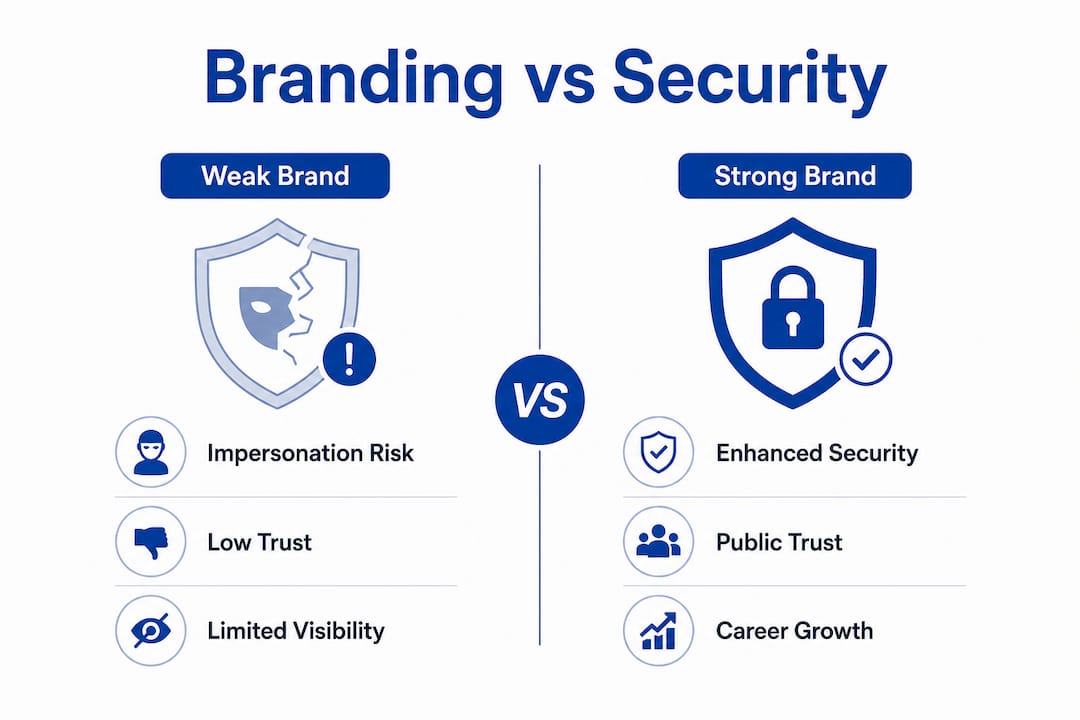
Transparent, verifiable digital outputs change that equation. GitHub repositories and documented projects serve as proof of technical skill that is difficult to fabricate at scale. A fraudster cannot replicate three years of commit history, published CVEs, or a blog with 50 detailed posts.
| Security risk | Weak personal brand | Strong personal brand |
|---|---|---|
| Impersonation | Easy to clone with no verifiable history | Hard to fake with years of documented output |
| Identity fraud | No baseline for comparison | Established record makes anomalies obvious |
| Reputation damage | No owned narrative to counter false claims | Public record provides immediate rebuttal |
| Deepfake exposure | No authenticated content to reference | Verified video and audio history aids detection |
The table above shows that brand deal risks from identity theft are significantly lower when your digital presence is deep, consistent, and verifiable.
Effective strategies for building a personal brand aligned with security principles
Building a security-conscious personal brand requires a coordinated approach across platforms, not random posting. Think of LinkedIn, GitHub, Medium, and X (formerly Twitter) as a single ecosystem. Each platform serves a different function, and together they create a presence that is both credible and hard to impersonate.
Follow these steps to build your brand with security in mind:
- Choose your niche. Pick one or two specific areas, such as cloud security, threat intelligence, or application security. Broad, generic profiles attract less trust and fewer opportunities than focused ones.
- Create verifiable public artifacts. Write technical blog posts on Medium, publish open-source tools or scripts on GitHub, and document responsible vulnerability disclosures. Public artifacts demonstrate expertise more effectively than any resume line.
- Synchronize your profiles. Use the same professional photo, name, and bio across every platform. Unified profiles improve authenticity and make it easier for others to verify you are who you claim to be.
- List exact certifications and roles. Specifying credentials like OSCP or CISSP and exact role titles boosts profile visibility in recruiter searches and AI-powered hiring tools.
- Maintain ethical boundaries. Never share client data, internal system details, or sensitive findings in public posts. Your professional integrity is the foundation of your brand.
- Engage with the community. Comment on others’ posts, answer questions on forums, and participate in CTF competitions. Visibility compounds through contribution.
Pro Tip: Commit to publishing one substantive piece of content per week. Consistent weekly posting compounds audience growth and trust over time in ways that sporadic bursts never achieve.
Common pitfalls when managing your personal brand in cybersecurity
The most damaging mistakes in personal brand management are not technical. They are ethical and behavioral. Sharing sensitive client or company information publicly can destroy professional credibility instantly in cybersecurity communities. One post with the wrong detail can end a career that took years to build.
Watch out for these specific pitfalls:
- Oversharing operational details. Posting about active engagements, client names, or internal tools violates trust and may breach legal agreements.
- Generic or vague branding. Profiles that describe you as a “cybersecurity enthusiast” with no specifics signal inexperience and dilute trust.
- Inconsistent platform presence. A polished LinkedIn profile paired with an abandoned GitHub or a mismatched bio on X creates confusion and raises authenticity questions.
- Ignoring negative feedback. Dismissing or deleting critical comments publicly signals defensiveness. Respond professionally, correct errors openly, and move on.
- Posting without a strategy. Random, infrequent content produces no compounding effect. Treat your content calendar as a professional commitment, not an afterthought.
Maintaining creator privacy online while building a public brand requires a clear line between what you share professionally and what you keep private. That line is not always obvious, but drawing it deliberately protects both you and the people you work with.
How does personal branding drive security career opportunities?
Personal branding transforms security professionals from job seekers into thought leaders. Inbound opportunities like consulting, speaking, and collaboration emerge from a sustained public presence. Hiring managers and conference organizers reach out to people they already know and trust, and your personal brand is how they find you before you ever apply.
The timeline for this shift is predictable. Significant inbound traction typically begins after two years of consistent effort. The early months feel slow, but the compounding effect of published content, community engagement, and profile optimization builds a foundation that pays off long term.
| Milestone | Timeframe | Typical benefit |
|---|---|---|
| Profile optimization | 0–3 months | Improved search visibility and recruiter discovery |
| First published content | 3–6 months | Credibility signals and community recognition |
| Consistent presence | 6–12 months | Network growth and peer referrals |
| Established reputation | 12–24 months | Speaking invitations and consulting inquiries |
| Thought leader status | 24+ months | Inbound job offers and media mentions |
A strong personal brand also provides career resilience. When industries shift, layoffs happen, or roles disappear, professionals with established reputations recover faster. Your brand travels with you in ways that an employer’s reference never does.
Key Takeaways
Personal branding in security is a practical defense tool, not just a career marketing strategy, and professionals who build it consistently gain both protection and opportunity.
| Point | Details |
|---|---|
| Personal brand as digital armor | A verifiable digital presence deters impersonation and makes identity fraud significantly harder. |
| Trust drives opportunity | 82% of professionals trust companies with socially active leaders, showing personal brand directly influences credibility. |
| Consistency is non-negotiable | Matching profiles, photos, and bios across all platforms authenticate your identity and reduce confusion. |
| Inbound traction takes two years | Sustained effort over 24 months is the threshold where consulting, speaking, and job offers begin arriving organically. |
| Ethics protect the brand | Sharing sensitive client data publicly can destroy years of credibility in a single post. |
Why I think personal branding is the most underrated security tool professionals have
Most security professionals spend years earning certifications and mastering technical skills. Very few invest the same discipline in building a verifiable public identity. That is a mistake, and I have seen it cost people real opportunities.
A personal brand is not vanity. It is professional insurance. When someone tries to impersonate you, clone your profile, or spread false information about your work, a deep and consistent digital record is your best defense. It gives colleagues, clients, and platforms a baseline to compare against. Without it, you are invisible in the right places and vulnerable in the wrong ones.
The professionals I have seen build the strongest brands share one trait: they started before they felt ready. They published imperfect posts, shared early-stage projects, and engaged with communities before they had a large audience. That early consistency is what creates the compounding effect that matters two years later.
Balancing authenticity with security is the real skill here. Share your expertise openly. Keep client details, internal systems, and sensitive findings private. That boundary, held consistently, is what separates a credible professional brand from a liability.
— Sidenty
How Sidenty helps you protect the brand you build
Building a strong personal brand takes years of consistent work. Losing control of your digital identity can happen in hours.
Sidenty specializes in protecting the digital identities and intellectual property of professionals and creators who have built real reputations online. From deepfake removal to unauthorized content takedowns, Sidenty’s team of legal experts handles the threats that personal branding alone cannot stop. With a 99.8% success rate in content removal, the work you put into your brand stays yours. Read the digital identity protection guide to understand exactly what protections apply to your situation in 2026. You can also learn how to protect your creator digital identity before a threat forces your hand.
FAQ
What is the role of personal branding in security?
Personal branding in security establishes a verifiable digital identity that authenticates who you are and deters impersonation, fraud, and reputational attacks. A consistent, public professional presence acts as digital armor in AI-driven environments where fake profiles and deepfakes are common.
How does personal branding protect against identity theft?
A deep record of published content, verified credentials, and consistent profiles makes it difficult for bad actors to clone or impersonate you convincingly. Transparent digital outputs like GitHub repositories and published articles create a baseline that fraudulent accounts cannot replicate.
How long does it take to build a personal brand in cybersecurity?
Significant inbound opportunities, such as consulting offers and speaking invitations, typically begin after two years of consistent effort. The first year builds the foundation; the second year is when the compounding effect of content and community engagement becomes visible.
Which platforms matter most for security professionals?
LinkedIn, GitHub, Medium, and X function best as a coordinated ecosystem rather than isolated profiles. LinkedIn drives recruiter visibility, GitHub proves technical skill, Medium builds thought leadership, and X supports real-time community engagement.
What is the biggest ethical risk in personal branding for security professionals?
Sharing sensitive client or company information in public posts is the most damaging mistake a security professional can make. It violates trust, may breach legal agreements, and can permanently destroy credibility within the cybersecurity community.