
Stolen digital identity is defined as the unauthorized takeover or cloning of a creator’s online persona, credentials, or content to deceive followers and exploit built-up audience trust. How stolen identity harms follower trust is not a slow, gradual process. It is immediate, measurable, and often irreversible without fast action. The industry term for the broader phenomenon is digital identity fraud, and it now reaches far beyond password theft. Creators on platforms like OnlyFans, Twitch, and Instagram face account laundering, deepfake impersonation, and cross-platform cloning that erode follower loyalty before most creators even realize something is wrong.
How stolen identity harms follower trust through authenticity signals
Followers do not consciously audit every account they follow. They rely on shortcut signals: account age, follower count, engagement patterns, and verification badges. These signals form what researchers call social proof, and identity thieves exploit every one of them.
Identity laundering is the practice of acquiring aged accounts, wiping their content, and rebuilding a new persona on top of the existing follower base. The account looks legitimate because it is old and has followers. Followers see continuity where there is none.
“The same account can be repeatedly repurposed for different scams due to residual trust and follower count. Followers fail to audit account history closely, falling prey to synthetic freshness and repurposed accounts.”
— ClusterWire.news, 2026
Verification badges make this worse, not better. Up to 47% of accounts pushing crypto scams carry paid verification badges. That number should stop you cold. A blue checkmark no longer signals authenticity. It signals that someone paid a fee or used stolen credentials to pass a verification process.
- Account age: Older accounts carry residual trust scores. Stolen or purchased accounts with years of history bypass follower skepticism immediately.
- Follower count: High counts signal credibility. When a thief inherits your follower base, they inherit your social proof.
- Verification badges: Badges often reflect a financial transaction or stolen ID submission, not genuine identity confirmation.
- Engagement history: Archived posts and comment threads create an illusion of authentic community that the new operator did not earn.
Visual trust signals alone are no longer sufficient to protect your followers or your reputation.
What follower behavior looks like after identity theft strikes
The impact of identity theft on trust shows up directly in follower behavior. Followers who encounter inconsistent content, sudden shifts in tone, or suspicious promotions from a familiar account do not always report it. Most simply disengage.
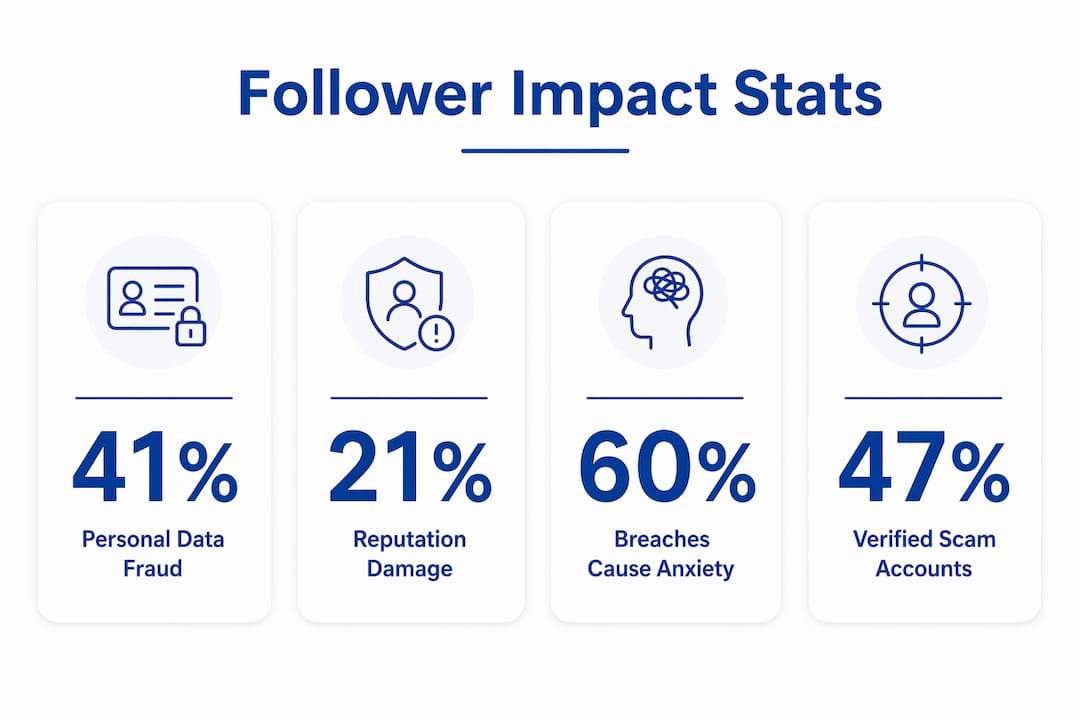
41% of people have experienced fraudulent use of personal data, and 21% report significant reputational or financial damage as a result. When that fraud involves a creator’s account, the damage spreads to every follower who trusted that creator’s recommendations.
The behavioral consequences for your audience fall into predictable patterns:
| Follower behavior | What it signals |
|---|---|
| Sudden drop in comment quality | Followers sense something is off but cannot name it |
| Spike in unfollows after a post | Content no longer matches the persona followers trusted |
| Increased DM complaints | Followers report scam links or strange behavior |
| Drop in click-through rates | Followers stop acting on recommendations |
| Silence after a promotion | Purchase intent collapses when trust is broken |
Fake follower indicators compound the problem. Sudden follower spikes, low comment ratios, and repetitive comments from small accounts all signal that an account’s audience has been artificially inflated or compromised. These signals pollute your analytics and make it nearly impossible to measure genuine engagement.
The psychological impact on real followers is significant. Data breaches cause anxiety in 60% of individuals and increase phishing susceptibility by 54%. Followers who realize they were deceived by a stolen account feel violated. That feeling transfers to the original creator, even when the creator was the victim.
How cross-platform cloning compounds trust damage
Identity is a portable reputation. A creator’s persona, visual brand, and audience relationship do not live on one platform. They exist across Instagram, TikTok, YouTube, Twitch, and OnlyFans simultaneously. That portability is a strength until it becomes a liability.
Cross-platform identity cloning is a growing threat precisely because public personas are easy to replicate. A thief copies your profile photo, bio, posting style, and content format, then launches a parallel account on a platform where your followers also spend time. Your audience encounters two versions of you and has no reliable way to tell which is real.
The steps a cloning attack typically follows:
- Profile replication. The attacker copies public-facing identity elements: name, photo, bio, and pinned content.
- Follower targeting. The clone account follows your existing followers, exploiting the existing relationship.
- Narrative hijacking. The clone posts content that mimics your voice, then gradually shifts toward scam promotions or misinformation.
- Credential exploitation. If the attacker gains access to your actual credentials, they can lock you out and take full control of the original account.
- Cross-platform amplification. The clone spreads across platforms where verification differs by platform, creating gaps that attackers exploit.
Verification on one platform does not assure authenticity on others. A creator verified on YouTube may have an unverified clone on TikTok that followers cannot distinguish from the real account. This fragmentation is one of the most underestimated risks in the current identity threat environment.
Heritage accounts, including accounts of deceased individuals, sell for up to $15,000 on identity markets. Buyers acquire not just the account but the entire trust history attached to it. That trust history then becomes a weapon against the very followers who built it.
How to detect, respond to, and rebuild follower trust after identity theft
Early detection is the most effective defense against identity fraud and follower loyalty collapse. The warning signs are specific and recognizable if you know what to look for.
Early warning signs to watch:
- A sudden spike in followers not connected to any content you published
- Engagement rate drops sharply while follower count holds steady or rises
- Followers send DMs asking about promotions you never posted
- Your account appears in search results with content you did not create
- Login alerts from unfamiliar devices or locations
Pro Tip: Set up login notifications on every platform you use. Most platforms offer this in security settings. A login alert from an unfamiliar location is your earliest possible signal of a takeover attempt.
Once you confirm a compromise, transparent communication with your followers is the fastest path to limiting damage. Consumer trust recovery requires proactive communication and sustained protection investments. Post a clear, direct statement on every platform you control. Tell followers what happened, what you are doing about it, and how they can verify your real accounts going forward.
Technical protections that creators should implement immediately:
- Enable two-factor authentication (2FA) on every account using an authenticator app, not SMS
- Use a password manager to generate and store unique credentials for each platform
- Audit your online privacy risks regularly, including third-party app permissions
- Establish a verified contact channel, such as a website or email list, that you fully control
- Monitor your name and brand across platforms using alert tools
Collaborating with a specialized service accelerates recovery. Sidenty’s team handles DMCA notices, Google delisting, and platform-level impersonation reports with a 99.8% content removal success rate. Working with professionals who understand platform-specific processes cuts weeks off the recovery timeline. Learning to detect identity theft early is the skill that protects everything you have built.
Rebuilding follower trust after fraud also requires consistency over time. Authenticity in branding is the foundation of sustainable audience loyalty. Followers who see you respond with transparency and speed are more likely to stay than those who receive silence.
Key Takeaways
Stolen digital identity causes immediate, measurable harm to follower trust by exploiting authenticity signals, polluting engagement data, and spreading deception across platforms before creators can respond.
| Point | Details |
|---|---|
| Authenticity signals are exploitable | Account age, follower count, and badges no longer guarantee a real creator is behind an account. |
| Follower behavior changes fast | Engagement drops, unfollows, and DM complaints appear within days of a compromised account posting. |
| Cross-platform cloning multiplies damage | A clone on one platform undermines trust on all platforms where your audience follows you. |
| Early detection limits harm | Follower spikes, engagement mismatches, and login alerts are the first signs of identity theft. |
| Transparent communication rebuilds trust | Proactive, clear messaging to followers after an incident is the fastest path to loyalty recovery. |
What years of watching identity fraud do to your perspective on creator security
The pattern I see most often is not dramatic. It is quiet. A creator notices their engagement is off. Their DMs have a strange tone. A follower asks about a promotion that never happened. By the time the full picture becomes clear, the damage is already weeks old.
What strikes me most is how much of this is preventable. Identity laundering works because platforms still treat follower count and account age as reliable trust signals. They are not. They are metrics that can be purchased, inherited, or stolen. Creators who understand this stop treating verification badges as a finish line and start treating them as one signal among many.
Platform responsibility is real, but waiting for platforms to solve this problem is a losing strategy. The creators I see recover fastest are the ones who treat identity defense as part of their brand-building process from day one. They have verified contact channels. They communicate with followers directly. They monitor their presence across platforms consistently.
The uncomfortable truth is that your follower trust is your most valuable asset, and it is also the asset that attackers target first. Protecting it requires the same seriousness you bring to content creation. Integrating identity protection best practices into your regular workflow is not optional in 2026. It is the baseline.
— Sidenty
How Sidenty protects your identity and restores follower trust
Your reputation as a creator is built over years. Losing it to identity fraud can happen in days.
Sidenty specializes in digital identity protection for creators on platforms like OnlyFans, Twitch, Instagram, and beyond. The team handles DMCA takedowns, deepfake removal, impersonation reports, and Google delisting with a 99.8% content removal success rate. If your account has been cloned, your content stolen, or your identity used without consent, Sidenty’s legal experts move fast to contain the damage and restore your standing. Explore creator identity protection to understand exactly what Sidenty can do for your specific situation in 2026.
FAQ
How does stolen identity harm follower trust?
Stolen identity breaks the link between a creator’s authentic persona and their audience. Followers who encounter inconsistent content, scam promotions, or unfamiliar behavior from a familiar account lose confidence and disengage.
Can a verification badge prove an account is real?
No. Up to 47% of scam accounts carry paid verification badges. A badge confirms a payment or identity submission was processed, not that the account belongs to the original creator.
What are the first signs that your identity has been stolen online?
The clearest early signs include sudden follower spikes unconnected to your content, engagement drops, and followers asking about promotions you never posted. Fake follower indicators like repetitive comments from small accounts also signal a compromised or cloned account.
How long does it take to rebuild follower trust after identity fraud?
Recovery time depends on how quickly you communicate and act. Proactive, transparent messaging to followers combined with technical safeguards and professional support shortens the timeline significantly. Trust recovery requires sustained effort, not a single post.
What is identity laundering and why does it matter for creators?
Identity laundering is the practice of acquiring aged accounts, wiping their content, and rebuilding a new persona to exploit the existing follower base. It matters because followers cannot detect the switch, and the stolen trust is used to run scams or spread misinformation under your audience’s radar.