
Creator privacy online is defined as the active protection of a creator’s personal and professional information from unintended exposure, misuse, or exploitation across digital platforms. For content creators and digital influencers, this is not a theoretical concern. Identity theft, doxxing, and deepfake abuse are direct threats that can end careers, compromise personal safety, and cause lasting financial damage. The importance of online privacy has never been sharper than in 2026, when AI-generated content and data broker markets make creator information easier to exploit than ever before.
Why creator privacy matters online more than ever in 2026
Creator privacy matters online because creators operate at the intersection of maximum visibility and minimum protection. You build an audience by sharing your face, voice, location, and personality. That openness is your product. It is also your vulnerability.
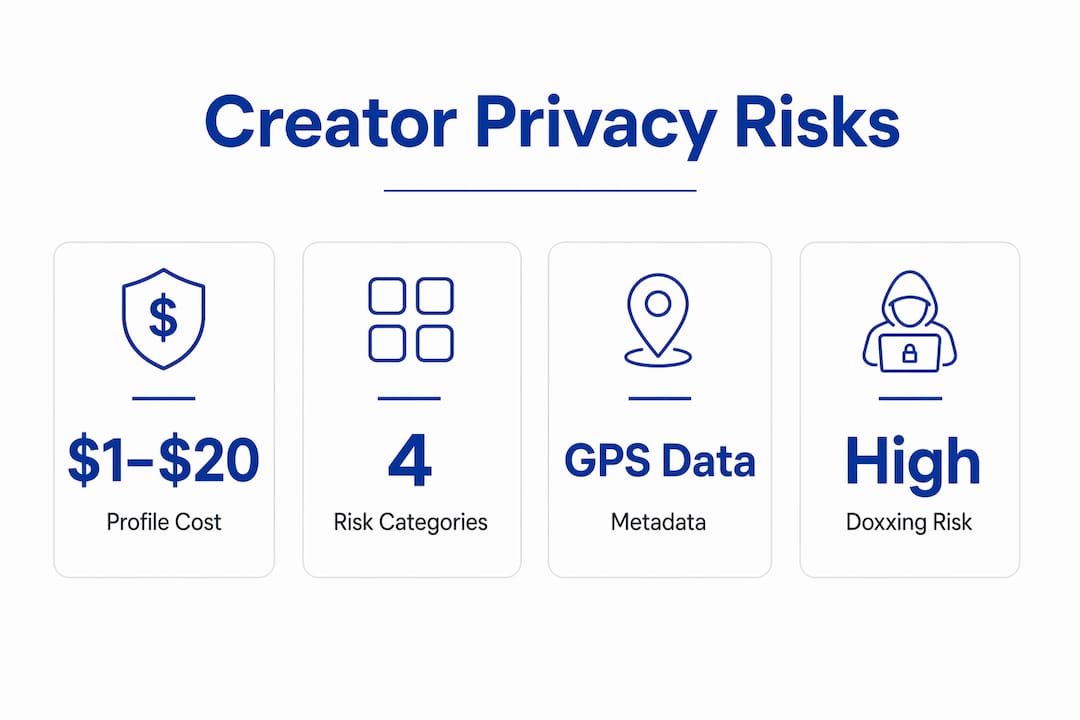
Data brokers target creators aggressively, selling complete personal profiles for as little as $1–$20. That price point means your home address, phone number, and linked accounts are available to anyone willing to spend less than a coffee. The financial and personal risk that creates is real and immediate.

The digital identity theft threat compounds this. A creator’s name, face, and voice are public assets that bad actors can weaponize. Deepfake technology now allows anyone to fabricate video or audio using publicly available content, putting creators at risk of reputational damage they had no part in creating. Regulations like the GDPR exist partly to address these risks, but legal frameworks alone do not stop attacks before they happen.
What specific online privacy risks do creators face?
The online privacy concerns for content creators fall into four distinct categories, each capable of causing serious harm on its own.
Data broker profiling
Data brokers compile detailed profiles from public records, social media activity, and platform data. Creators are prime targets because they generate enormous amounts of public behavioral data. A broker can cross-reference your username across platforms, link it to a real name, and sell the full package. That profile can then be used for targeted harassment, fraud, or SIM-swap attacks that hijack your phone number and drain financial accounts.
Doxxing and viral escalation
Viral exposure dramatically increases doxxing risk, often starting with small data points like location metadata embedded in a photo. When a post goes viral, it attracts attention from people you never intended to reach. That attention can turn hostile fast. A single piece of identifying information, such as a neighborhood landmark visible in a background, can be enough to start an attack chain.
EXIF metadata exposure
Photo metadata often contains precise GPS coordinates and device information even after editing. Most creators do not realize their uploads carry this data by default. Posting a photo taken at home without stripping the EXIF data can reveal your exact address to anyone who knows how to read it.
Identity and account compromise
The risks extend to account takeovers, financial fraud, and deepfake misuse. Here is a summary of the most common attack vectors:
- SIM swapping: Attackers use personal data to convince carriers to transfer your phone number, bypassing two-factor authentication.
- Credential stuffing: Recycled passwords across platforms allow one breach to unlock multiple accounts.
- Deepfake abuse: AI-generated video or audio uses your public content to fabricate statements or explicit material without your consent.
- Phishing targeting: Detailed broker profiles make phishing attempts more convincing and harder to detect.
How do privacy-by-design principles protect creators’ digital identities?
Effective privacy requires a layered system, not a single tool or setting. Privacy-by-design is the practice of building privacy protections into your workflow from the start, rather than patching problems after they occur. For creators, this means treating your creator identity and your personal identity as two separate systems that should never fully connect.
Compartmentalization as a core strategy
Separation is more effective than invisibility for protecting creator identity online. You do not need to disappear. You need to keep your public persona from linking back to your private life. That means using a dedicated email address for creator work, a separate phone number for platform registrations, and ideally a separate device for creator activities.
Behavioral data is generated passively and links identities without your explicit consent. Every app you open, every search you run, and every location you visit creates a data trail. Keeping creator and personal activities on separate devices prevents that trail from merging into a single profile that exposes both.
Pro Tip: Use a dedicated browser profile or a separate browser entirely for creator work. This prevents ad networks from linking your personal browsing history to your creator accounts.
Reducing your data footprint
- Scrub metadata from every photo and video before uploading. Tools that strip EXIF data are widely available and take seconds to use.
- Audit app permissions regularly. Many third-party integrations request access to contacts, location, and camera data that they do not need.
- Avoid linking accounts across platforms using the same recovery email or phone number. Cross-platform links create vulnerabilities even when individual privacy settings look strong.
- Use a P.O. box or virtual mailbox for any business correspondence that requires a physical address.
What legal and regulatory considerations should creators know?
Creator data protection is not only a personal responsibility. It is a legal one. If you collect any data from your audience, including email addresses, payment information, or behavioral analytics, you operate under privacy law obligations.
The GDPR applies to any creator with European Union audience members, regardless of where the creator is based. EU regulators issue multi-million euro fines for unauthorized data scraping and improper data handling. That exposure is real for creators who run newsletters, membership platforms, or fan databases without proper consent structures.
The core legal obligations for creators handling fan data are:
- Obtain explicit, recorded consent before collecting any personal data from your audience. A checkbox buried in terms of service does not meet GDPR standards.
- State clearly what data you collect and how you use it. Vague privacy policies invite regulatory scrutiny.
- Honor deletion requests. Under GDPR, individuals have the right to request that their data be erased. You must be able to comply.
- Secure the data you hold. Storing fan emails in an unprotected spreadsheet is a compliance failure, not just a security risk.
The same legal framework that protects your audience also protects you. GDPR and similar regulations in California (CCPA) and other jurisdictions give you rights over your own data held by platforms and brokers. You can request deletion of your personal profiles from data broker databases. Many creators do not know this right exists.
How can creators practically implement privacy safeguards?
The creator privacy checklist approach works because it turns abstract principles into daily habits. Privacy does not require a complete overhaul of how you work. It requires consistent, small actions that compound over time.
Build a privacy-first workflow
Start with your accounts. Use a password manager to generate and store unique passwords for every platform. Enable two-factor authentication using an authenticator app rather than SMS, since SIM swapping bypasses SMS-based codes. Review which third-party apps have access to your primary accounts and revoke anything you no longer use actively.
Your upload process matters just as much as your account security. Before posting any photo or video, strip the metadata. Check backgrounds for identifying information. Use a virtual private network when working from public networks, since your IP address can reveal your approximate location to anyone monitoring traffic.
Pro Tip: Set a monthly calendar reminder to audit your third-party app connections on every platform you use. Permissions accumulate quietly, and a 10-minute review can close significant gaps.
Here is a practical daily and weekly checklist:
- Before every upload: Strip EXIF data, check for visible location identifiers in the background.
- Weekly: Review login activity on major platforms for unrecognized sessions.
- Monthly: Audit third-party app permissions, update passwords on high-risk accounts, search your name and username to monitor new exposures.
- Annually: Submit data deletion requests to major data broker databases and review your privacy settings across all active platforms.
Content protection technology can automate parts of this process, particularly monitoring for unauthorized use of your content or identity across the web.
Key Takeaways
Creator privacy online is the single most effective defense against identity theft, deepfake abuse, and financial fraud targeting content creators.
| Point | Details |
|---|---|
| Data brokers are a direct threat | Full creator profiles sell for as little as $1–$20, making personal data cheap and easy to exploit. |
| Layered privacy beats single tools | Combining compartmentalization, metadata scrubbing, and permission audits creates protection no single setting can match. |
| Legal obligations are real | GDPR and CCPA require explicit consent and secure data handling from any creator collecting audience information. |
| Separation protects identity | Using dedicated emails, devices, and accounts for creator work prevents personal and public identities from linking. |
| Consistent habits close the gaps | Monthly audits, EXIF scrubbing, and strong password hygiene stop most common attack vectors before they escalate. |
Privacy is freedom, not a limitation
Working with creators who have had their identities stolen or their likenesses used in deepfakes has taught me one thing clearly: the violation is not just technical. It is personal. The feeling of losing control over your own image, your own name, is genuinely disorienting.
What I have also seen is that the creators who recover fastest are not the ones who go dark or abandon their platforms. They are the ones who had systems in place before the attack. Compartmentalization, metadata hygiene, and regular audits are not paranoia. They are professional practice.
Privacy analyst Thomas Bunting frames it well: privacy is not about hiding wrongdoing. It is about preserving freedom of thought and the space to experiment without surveillance. For creators, that space is where the best work happens. You cannot create freely when you are afraid that every post is a data point someone is using against you.
The goal is not invisibility. The goal is intentional control. You decide what is public, what is private, and what protections sit between the two. That control is not a barrier to your audience. It is what keeps you in the game long enough to build one worth having.
— Sidenty
How Sidenty protects creators’ digital identities
Your privacy deserves more than a checklist. Sidenty was built specifically for creators facing the threats covered in this article, from data broker exposure to deepfake misuse.
Sidenty’s deepfake removal service and identity protection platform combine automated monitoring with a dedicated legal team, achieving a 99.8% success rate in content removal. Whether you are dealing with unauthorized content on OnlyFans, Twitch, or elsewhere, Sidenty handles the removal process so you can stay focused on creating. If your likeness has been used without consent, or your personal data is circulating in places it should not be, professional support is available now.
FAQ
Why does creator privacy matter more than general online privacy?
Creators share their face, voice, and location publicly by design, making them far more exposed to identity theft, doxxing, and deepfake abuse than the average internet user.
What is the biggest privacy risk for content creators in 2026?
Data broker profiling is the most pervasive risk. Full creator profiles sell for as little as $1–$20, giving bad actors easy access to personal information that enables fraud, SIM swapping, and targeted harassment.
Does GDPR apply to independent content creators?
Yes. Any creator with EU-based audience members who collects personal data, including email addresses or analytics, must comply with GDPR requirements for consent, data security, and deletion rights.
How does EXIF metadata expose a creator’s location?
Photos taken on smartphones embed GPS coordinates and device information by default. Posting without stripping this metadata can reveal a creator’s exact location to anyone who examines the file.
What is the most effective first step to protect creator identity online?
Compartmentalization is the highest-impact starting point. Using separate emails, phone numbers, and devices for creator work prevents your public persona from linking back to your private identity.